
If you are scheduled to have total knee replacement surgery, one of the most common questions cyclists ask is: can I still ride a bike after the surgery? The short answer is yes. In fact, riding a bike is actually a great form of physical therapy following knee replacement surgery.
Contents of This Post about How to Rehab after Knee Replacement Surgery
- Tip #1: Getting Started: Passive Range of Motion
- Tip #2: Physical Therapy and Becoming Active
- Tip #3: Working Your Way Up to Cycling with a Stationary Bike
- Tip #4: Achieving Full Range of Motion
- Tip #5: Advancing to Outdoor Cycling
- Final Tips for Returning to Activity after Knee Surgery
- Extra Content: How to Prevent Cycling Knee Pain with a Complete Stretching Program
For many people, knee replacement is a sensible option. If you are suffering from pain and stiffness due to arthritis, it can interfere with your daily activities. Total knee replacement is also known as total knee arthroplasty. It is a beneficial option for treating the pain, stiffness, and loss of mobility that is associated with knee arthritis.
Once you’ve had your knee replacement surgery, it is vital to become active again. This will ensure your long-term health, because exercise is the single most important thing we can do to stay healthy. Here are some helpful recovery tips to help you prepare to get back on your bicycle.

Tip #1: Getting Started: Passive Range of Motion
For the first couple of weeks, two of your main goals are decreasing the swelling and achieving a full passive range of motion. So, you need to be prepared to work on this. Being able to cycle after total knee replacement depends on getting your entire body back in motion as quickly as possible after the surgery.
Even if your knee pain limited your activities before the surgery, you will need to work hard afterward to get your knee back to where it was before. And if you want to achieve the kind of fitness you had before knee pain slowed you down – you will have to work very hard to achieve this. However, it will all be worth it when you feel the wind on your face as you enjoy riding your bike again.

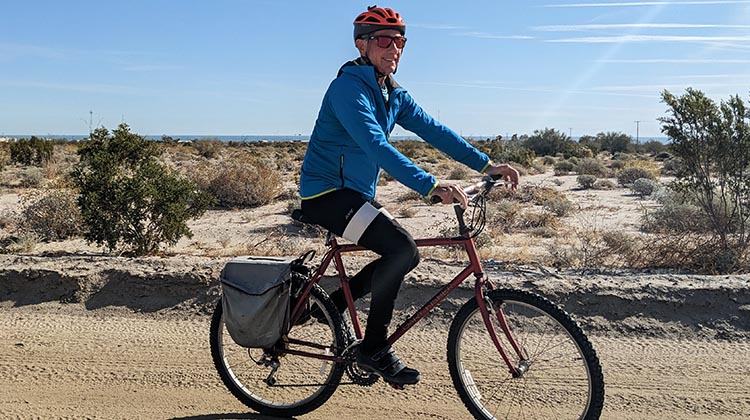 All your effort will be worth it once you feel the wind in your face again
Related: Ideal Regimen of 7 Supplements for Cyclists to Achieve Maximum Health and Performance
Related Post: Piriformis Syndrome in Cyclists – How to Prevent and Cure It
Tip #2: Physical Therapy and Becoming Active after Knee Replacement Surgery
One of the most important factors of rehabilitation following knee replacement surgery is physical therapy. Usually, within 24 hours after surgery, a physical therapist will visit you. Your physical therapist will help you stand, sit, walk, and use a continuous passive motion machine.
If you cannot have a physiotherapist visit you, try to visit one yourself. You will probably need to enlist the help of a family member or friend to get to the appointment.
Focus on the Outcome of Your Physical Therapy and Listen to Your Therapist
During the early stages of your physical therapy, you will experience a certain level of discomfort, stiffness, and pain, but it is important to focus on the outcome. To succeed in getting back to cycling, you must follow the advice of your physical therapist and become active as quickly as possible. This may be tough at the time, but keep your eye on the end goals, such as mobility, and a return to an active life.
Most rehab centers won’t allow you to go home until you can climb the stairs and walk, so the faster you get yourself active, the sooner you will be back to cycling.
Related Post: How to Cure Cycling Knee Pain with a Miraculous, Cheap Cure
Tip #3: Working Your Way Up to Cycling with a Stationary Bike after Knee Replacement Surgery
Range of motion is a critical part of your recovery following total knee replacement surgery. The good news is that using a stationary bike during your physical therapy is a great way to improve range of motion. And using a stationary bike will also prepare you to get back on your bicycle.
It is important that you check with your doctor and your physical therapist to find out when you can start using a stationary bicycle. Once you are ready, invest in the best stationary bike you can afford. The Peloton bike shown below is expensive, but could be a wise investment in your rehabilitation and long-term health.


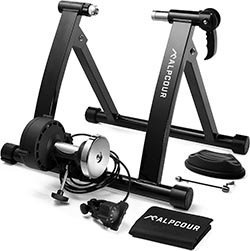
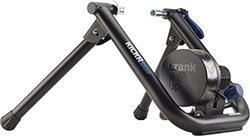
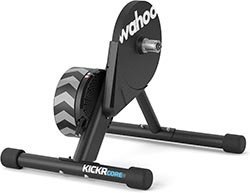
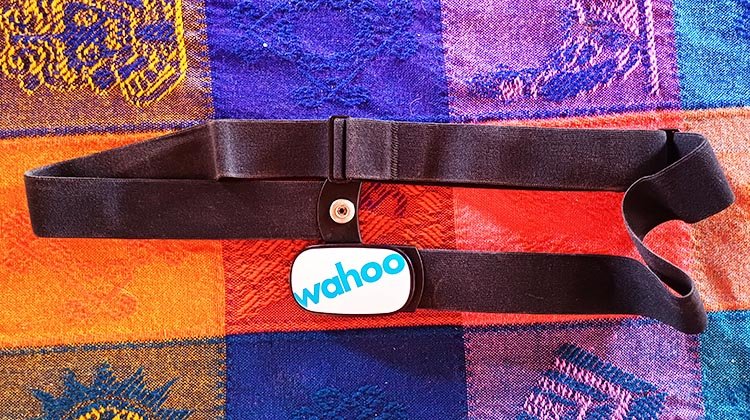
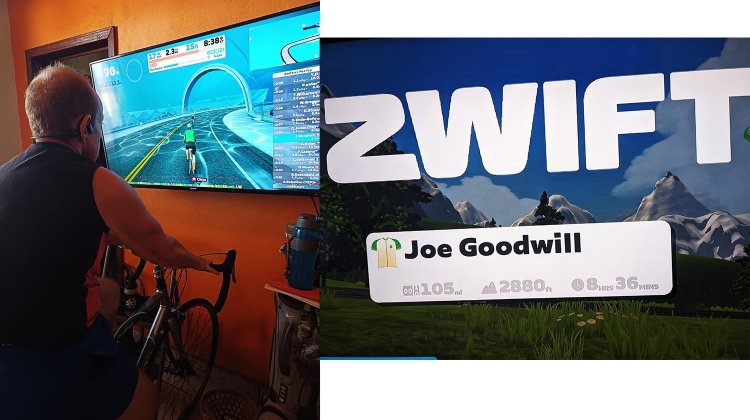
You can also use a smart trainer, which enables you to turn your existing bike into an indoor bike. And it will make your indoor cycling experience fun, and you will hardly notice how much exercise you are getting. The best ones are smart trainers that you can use to participate in a virtual cycling environment, such as Zwift. One of the most highly recommended is the Wahoo Kickr, shown below.


The smart trainer above can be yours for around $350. Please click here to check current price and reviews. Please note that as an Amazon affiliate I earn a small commission if you make a purchase.
 |  |  |  |
If a smart trainer is too intimidating, you can always start off with a recumbent exercise bike that is especially designed for safe cycling for seniors, such as the one below.


Once you have a suitable indoor bike, be sure to start off very slowly, and work your way up gradually and carefully. Stop immediately if you feel any pain.
Related Post: How to Prevent and Treat Iliotibial Band Syndrome (ITBS)
Get Your Stationary Bike Set Up Correctly
Be sure to set the seat height appropriately. Your extended knee should be in a straight line when your foot is resting on the pedal, with only a very slight bend in your knee.
Start Cycling Slowly
Start out slowly and keep in mind that you may not be able to turn the cranks all the way around. Slowly pedal forward and backward for a few minutes. Continue this routine until your range of motion improves. The good news is that this often happens quite quickly. But if not, do not despair. Just keep working on it, gently, and your range of motion will improve.
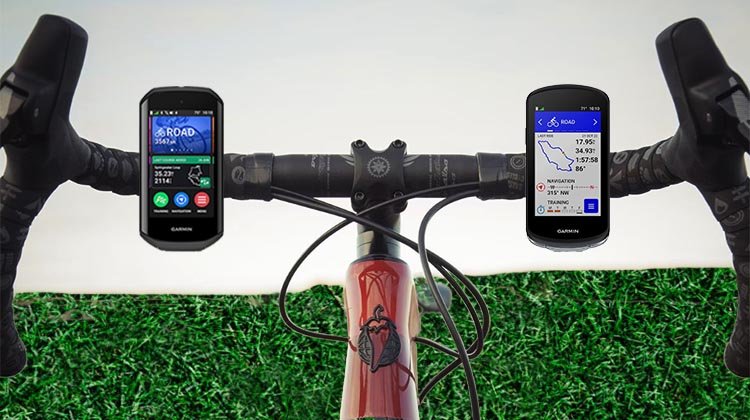
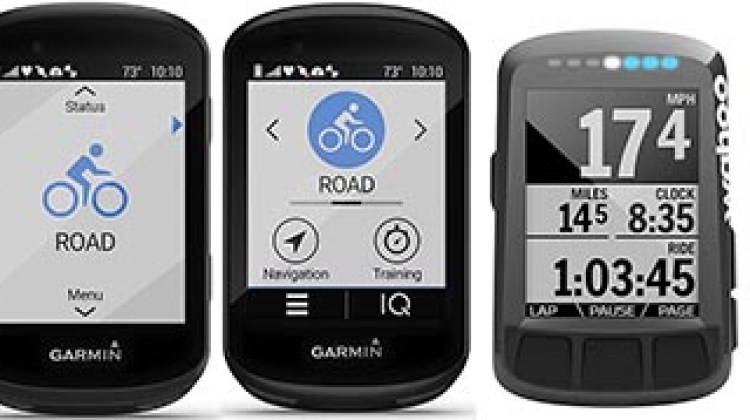
Garmin Edge 540 vs 840 vs 1040: Complete Comparison with Chart
Related Post: Complete Guide to Stretching for Cyclists
Tip #4: Achieving Full Range of Motion
When your knee is able to bend about 90 degrees, you should be able to turn the cranks fully around on your stationary bicycle. Once you can complete a full revolution, consider adding light resistance to help improve the endurance and strength of your muscles. If you start feeling pain in your knee, decrease the resistance.
In most situations, you can begin riding a stationary bike about two weeks after your knee replacement surgery.
Tip #5: Advancing to Outdoor Cycling after Knee Replacement Surgery
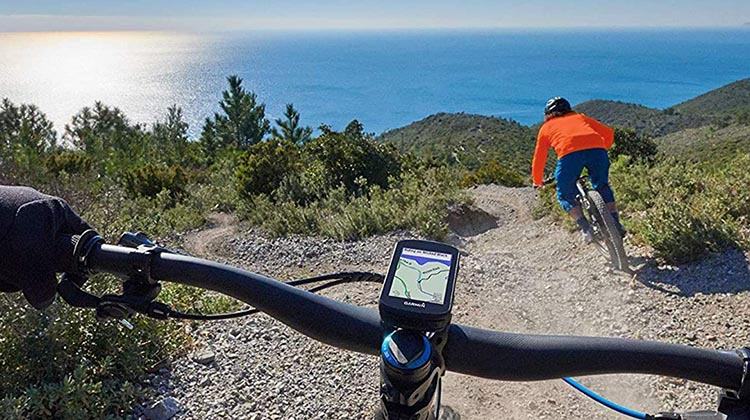
After about six weeks of riding a stationary bike, your doctor may clear you to start riding your bicycle outdoors. It is important that your doctor clear you before you begin riding outdoors. Once you start cycling outdoors, take it carefully and slowly, and always stop if you feel pain.

 Returning to outdoor cycling after knee surgery will help you to live a full life and return to complete fitness
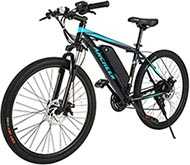
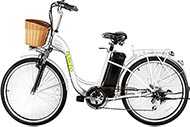
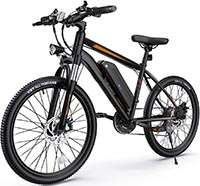
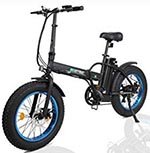
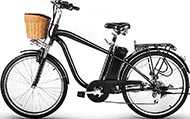
You may well find it easier to start out with an electric bike. This way, you can use assistance on any uphills to avoid putting too much stress on your knees. As you get stronger, you may eventually feel strong enough to transition to a regular bike. If this sounds like a good option, then the following two posts may be useful for you.
 |  |  |  |  |
How to Use an Electric Bike to Rehab and Get Fit
7 Cheap E-Bikes under $1000 You Can Buy on Amazon


The e-bike above can be yours for around $600. Please click here to check current price and reviews. Please note that as an Amazon affiliate I earn a small commission if you make a purchase.


Related Medical Posts for Cyclists
Related Post: Exercise Doesn’t Help with Fat Loss – A Myth that Needs to be Busted?
Related Post: How to Come Back from a Cycling Injury
Related Post: Four Steps to Prevent and Recover from Cyclist’s Knee (Patellar Tendinitis)
Related Post: How to Modify Your Bike to Cycle with Thumb Arthritis (CMC Arthritis) or De Quervain’s Tenosynovitis
Related Post: Can Cycling Cause Penis Numbness, Erectile Dysfunction, and Prostate Cancer?
Related Post: 3 Easy Tips for Preventing Plantar Fasciitis – and 5 Simple Exercises to Cure It
Related Post: How to Prevent and Treat Iliotibial Band Syndrome (ITBS)
Related Post: Piriformis Syndrome in Cyclists – How to Prevent and Cure It
Related Post: Returning to Cycling and Swimming after Severe Piriformis Syndrome: A Step-by-Step Plan
Related Post: A Step-by-step Guide to Returning to Cycling After Severe Piriformis Syndrome
Related Post: Exercises and Stretches for Piriformis Syndrome in Cyclists
Related Post: How to Cure Cycling Knee Pain with a Miraculous, Cheap Cure
Related Post: Science Shows that Exercise is a Miracle Cure and Protects You from Diseases
Related Post: 7 Ways to Prevent Cycling Knee Pain
Related Post: Video: 3 Exercises for Cycling Knee Pain
Final Tips for Returning to Activity after Knee Surgery
The most important thing you can do to prepare for resuming cycling after knee replacement surgery is to keep all of your scheduled follow-up appointments, follow the exercise and therapy routines recommended to you, and avoid overdoing it.

Dr. Nakul Karkare is a trusted knee and hip replacement surgeon based in New York City and Long Island. For more information, visit newyorkhipknee.com.
Extra Content: How to Prevent Cycling Knee Pain with a Complete Stretching Program
Cycling Knee Pain is a major concern for many cyclists. Here’s an easy way to prevent cycling knee pain, with a set of simple stretches – and also some basic exercises, if you want to be even more proactive!


Our post called Average Joe Cyclist’s Miraculous Cheap Cure for Cycling Knee Pain is by far our most popular post ever. This shows how common the problem is.
It’s Better to PREVENT Cycling Knee Pain than to Have to Cure it
One thing I learned when I was a life guard is that it is far better to prevent a problem than to deal with it after it happens (stopping a non-swimmer from jumping in the deep end is a lot easier and smarter than pulling a 200 pound man up from the bottom of the pool). So I have been working hard to find ways to prevent the cycling knee pain that threatens anyone who regularly rides a bike.
What Causes Cycling Knee Pain?
It is very important to have a bike that fits your own specific body, which can most easily be achieved by getting a professional bike fitting. Notice in this table how minor problems in your bike fit can cause major problems with your knees.


If you cannot afford a professional bike fit, or don’t want to spend that much money, it is possible to do it yourself. Here is a book called Bike Fit that will show you how to do it.


As you may notice from the table above, one cause of cycling knee pain is surprisingly simple – wrong saddle position! Here’s a video that will help with that:
Related Post: How Women Cyclists Can Prevent Saddle Soreness and Associated Issues
Related Post: Can Cycling Cause Penis Numbness, Erectile Dysfunction, and Prostate Cancer?
A Simple Routine of Stretches to Prevent Cycling Knee Pain
But a bike that fits is not enough in itself. I consulted with legendary sport physiotherapists Karen Nichols and Saqib Niaz at Royal City Physio, and was given a simple routine of stretches to prevent cycling knee pain. Based on my personal experience: if one does these religiously (at least after cycling, and preferably before AND after), cycling knee pain can be dramatically reduced – or even prevented. I even find that when I start to feel knee pain, I can make it stop more effectively by doing these stretches than by taking pain pills.
So this is my simple, four-step routine to prevent cycling knee pain.
Step 1: Stretch your hamstrings (the muscles at the back of your thigh)


There are many ways to do this. My favorite is to hop on an empty desk, with one leg out straight and one hanging down. It is then easy to stretch the hamstring by leaning forward. Above, my daughter Emily shows how it’s done. She kindly agreed to model these exercises (trust me, she looks WAY better in stretch pants than I do!)


It is also easy to stretch the hamstrings by just trying to touch your toes, or leaning forward to grab your ankles. Or you can try lifting one foot onto a table, and leaning forward, as Emily demonstrates above. The key is to find a stretch that you can do comfortably.
Stretch each hamstring twice, for 40 seconds at a time. Do the stretches gently but firmly – and do not bounce!
Step 2: Stretch your quads (the muscles at the front of your thigh)


Some people are able to do this by bending their knee and putting their foot on a chair behind them, then leaning back till they feel the stretch. Personally, I find this hard. Most people can do this quad stretch by bending their knee and grabbing their ankle or foot behind their backs, as Emily demonstrates above. I find it easiest to lie down on the floor and bend my leg upwards. It’s basically the exercise above, but done lying down!
Again, stretch each quad twice, for 40 seconds at a time. Do the stretches gently but firmly – and do not bounce!
Step 3: Stretch your calves
The easiest way to do this is to put your toe on a big fat book and lean forward. You can also do it by leaning forward into a wall. Below, Emily leans into a wall with her toe on a box, for a very challenging stretch.


Stretch each calf twice, for 40 seconds at a time. Do the stretches gently but firmly – and do not bounce!
Step 4: Practice balancing on one leg
Basically the idea is to balance on each leg twice, for as long as you can. Make the balance more or less challenging, depending on how good your balance is. Emily demonstrates a simple balance here.


Below Emily demonstrates a more challenging balance. Folding your arms in front of you at shoulder height makes the balance much harder. Lifting your knee higher also makes it harder. And to make it even more challenging, try closing your eyes!


Balancing is a matter of use it or lose it – and riding a bike will not in itself provide enough balancing practice. My balance was terrible when I started doing balance work, but it has improved dramatically.
Good balance is linked to strong, stabilizing core muscles, which help you to maintain good posture on your bike, thus avoiding cycling knee pain.
And that’s it. Just four simple steps, but they have dramatically decreased my cycling knee pain – I hardly ever get it any more. Try it – you have nothing to lose but your knee pain. And even if it does not work for you, you will definitely increase your flexibility and improve your balance!
Video Showing Three Vital Exercises to Prevent and Cure Cycling Knee Pain
Bonus: This video shows three vital exercises that will both prevent and cure cycling knee pain, demonstrated by ace physiotherapist Saqib Niaz:
Update: We Cyclists Also Need to Stretch Our Hips
Since writing this blog post, I started experiencing a new cycling-related pain – hip pain in what I all the wallet area. You know, the spot where men carry wallets in their back pockets. Pain so bad I thought I had some kind of wallet-area cancer. So I consulted with my trusty physiotherapist, and ended up adding in three stretches for the hips. These stretches worked like magic! So, I now highly recommend adding in these hip stretches. They are demonstrated in this video, by the trusted physiotherapist I just mentioned. Saquib is doing these on a table, but I have figured out how to do them on my bed!
One More Tip: Ice Proactively to Prevent Cycling Knee Pain
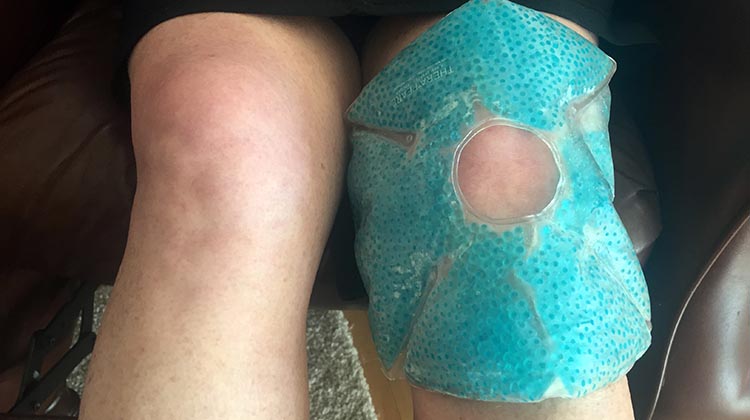
One More Tip: Ice Proactively to Prevent Cycling Knee Pain Don’t wait for cycling knee pain to set in before hauling out the ice packs. I ice after every major ride, just to soothe my knees and reduce the chances of inflammation, irritation, and swelling. Use a good product that makes it easy. I have a set of Therapearl Knee Wraps that are easy to strap around my knees. Here is one of them, strapped around one of Mrs. Average Joe Cyclist’s knees.



Related Posts that May be Helpful for You if You Have Had knee Replacement Surgery (or Want to Avoid It)
Related Post: Cycling Training Plan for Novices and Complete Beginners
Related Post: Top 10 Ride Your Way Lean Dietary Rules
Related Post: How Many Calories Do You Burn Cycling?
Related Post: Our Miraculous, Cheap Cure for Cycling Knee Pain
Related Post: 7 Easy Ways to Prevent Cycling Knee Pain
Related Post: The 10 Best Stretches for Cyclists
Related Post: How to Prevent Plantar Fasciitis – PLUS our Easy Cure
Check Out Our Most Popular Posts! | ||
| ||
Did you enjoy this post or find it helpful? If so, please support our blog! We write this blog because we love cycling. But we also need to earn a living, so we would appreciate it very much if you click through to one of our reputable affiliates for your online shopping. We are proudly affiliated with Amazon, which sells pretty much everything, and has outstanding shipping and return policies. When you buy from our affiliates we make a small commission, and this is the only way we earn any income. Plus, it costs you nothing at all - a real win/win situation! We here at Average Joe Cyclist do not receive any information AT ALL about who you are, where you live, or what your dog's name is. Buying through our Amazon links is simply an anonymous way to thank us for our efforts, like tossing a few coins in a tip jar. Except that it is Amazon who tosses the coins, not you! | ||










Leave a Reply