
This post is about the scientific proof that cycling boosts your brain function. People who cycle often do so to boost their physical health, such as by improving cholesterol levels, reducing the risk of heart diseases, and lowering blood pressure. But it’s exciting to learn that cycling also helps to build a better brain, both functionally and structurally. Here’s what science says about the cognitive benefits of pedaling.
Brain Boost #1: Cycling Makes Your Brain Grow
Cycling not only benefits physical health but also significantly enhances brain function. When you cycle, the increased neuronal activity stimulates the production of proteins such as brain-derived neurotrophic factor (BDNF) and Noggin, which are crucial for neurogenesis—the formation of new neurons. BDNF, in particular, plays a central role in neurogenesis, synaptogenesis, and synaptic plasticity, thereby supporting healthy brain function and potentially mitigating neurological diseases like Parkinson’s and Alzheimer’s.

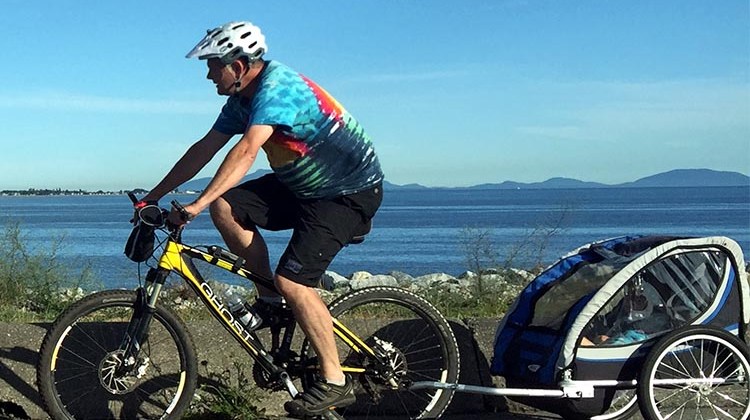
 Cycling can help you to resist aging naturally, by helping your brain to grow new neurons
Research indicates that physical exercise, including cycling, markedly elevates BDNF levels in the brain. This increase is associated with improved cognitive functions, such as enhanced memory and learning capabilities. A study published in the Proceedings of the National Academy of Sciences demonstrated that aerobic exercise leads to a significant rise in hippocampal volume, the brain region associated with memory, which correlates with increased serum levels of BDNF.
The Role of Noggin in Neurogenesis and Rejuvenating Cognitive Functions
In addition to BDNF, the protein Noggin plays a vital role in neurogenesis by inhibiting bone morphogenetic protein (BMP) signaling, which otherwise promotes glial cell differentiation over neuronal growth. By antagonizing BMP signaling, Noggin fosters a neurogenic environment conducive to the proliferation and differentiation of neural progenitor cells into neurons. Studies have shown that administering Noggin can restore stem cell numbers in the hippocampus, thereby rejuvenating cognitive functions.
Increased Gray Matter Volume
Moreover, consistent aerobic exercise has been linked to increased gray matter volume in various brain regions, particularly the prefrontal cortex and hippocampus, which are essential for executive function and memory. These structural changes are accompanied by improvements in cognitive tasks and overall mental agility. The upregulation of neurotrophic factors like BDNF and the modulation of signaling pathways by proteins such as Noggin underscore the profound impact of physical activities like cycling on brain health.
In summary, cycling serves as a potent catalyst for brain health by enhancing the production of critical proteins that support neurogenesis and cognitive function. Incorporating regular cycling into one’s routine can lead to substantial improvements in brain structure and performance, offering a non-pharmacological strategy to combat cognitive decline and promote neurological well-being.
 |  |
 |  |
 About $55. Please click here for current best price on Amazon. | 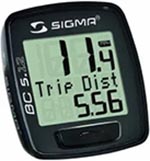 |
 | |
Related Post: Piriformis Syndrome in Cyclists – How to Prevent and Cure It
Related Post: Why Cycling May be the Sleep Aid You Need
Brain Boost #2: Cycling Enhances Brain Connectivity


All the hours you spend spinning the pedals don’t only work on your quads, but also on your gray matter. When the blood vessels in your brain receive an improved supply of nutrients and oxygen, they work better.
Although we hear a lot about gray matter, white matter also matters. White matter is usually on the lower side of the brain’s surface. It has been compared to a subway system that links up various parts of the brain. A breakdown of the functioning of this system results in slow thinking and other cognitive deficits. Thankfully, science shows that practicing a motor skill like riding a bicycle can improve brain performance.
Schizophrenia and Cycling
A study published in the Schizophrenia Bulletin reported research that was conducted on schizophrenia patients and healthy individuals. The research was conducted in the Netherlands, where bike riding is the norm for most people. Half of the subjects were put on a six-month regime of pedaling stationary bikes.
Even though it was indoors and many of the participants already did some cycling, the added pedaling made a huge difference. Brain scans on the subjects who were pedaling stationary bikes showed enhanced integrity of white matter fibers, in both schizophrenic and healthy brains.
Related Post: Science Shows HIIT on a Bike is the Best Exercise to Fight Aging – And We Show You How to Do it
Brain Boost #3: Cycling Enhances Memory and Reasoning


Aerobic exercises are beneficial to the brain in many ways. For instance, they help in maintaining sufficient blood flow to the brain, thus supplying it with a steady stream of nutrients and oxygen. Regular cycling helps with learning, judgment, and thinking – some of the same benefits that are claimed, for example, by products such as Optimind, that claim to enhance focus, energy and attention while nourishing your brain.
In a study published in the Journal of Clinical and Diagnostic Research, a group of healthy, young men were asked to pedal a bike for 30 minutes. They completed a set of cognitive tests before the cycling session and after the cycling session. They did better after cycling than they did before cycling. They scored well in reasoning, planning, and memory. The subjects also completed the tests faster after exercising than before exercising.
Related Post: Case Studies: 3 Seniors who Regained their Health with E-Bikes
Brain Boost #4: Cycling Boosts Self-Esteem
“What we think about ourselves is probably the central concept in our conscious lives.” William McGuire
 | |  |
Whether you agree with this notion or not, it would be difficult to disagree that your self-perception is crucial to your overall satisfaction and happiness. Because of this, social media can cause problems with self-esteem. Many people feel challenged by other people’s profiles, or want to be like them. In the process, they can lose their sense of who they themselves really are. If you are caught up in the Instagram or Facebook blues, cycling can help.
In an analysis of the impact of physical activity on self-esteem, Duncan and Eyre concluded that the former has positive effects on the latter. When carrying out the study, the researchers found that the effects were not dependent on the duration and intensity of physical activity. So, a little cruising on your bike to and from work can have a substantial overall impact on your self-esteem!
Related Post: Science Says Exercise Protects You from Dread Diseases as You Age
Brain Boost #5: Cycling Fights Depression

 Three women, excited about participating in The Ride to Conquer Cancer. There is no doubt that cycling combats depression and promotes positive emotions
Cycling is an effective anti-depressant. It releases hormones known as serotonin and dopamine. Although the specific mechanism of how it does this is still unclear, studies show that pedaling for 30 minutes daily is effective for people with depression.
A long-term study of volunteers from Alameda County in California showed that high levels of physical activity like cycling result in a lowered risk of developing clinical depression. The results remain unaltered even when other factors such as social supports and socioeconomic status come into play. Unlike many other treatments for depression, such as medications, cycling does not have any adverse effects.
Bottom Line on Cycling and Your Brain
From this research (and a wealth of similar studies), it is apparent that cycling is very good for your brain. We hope that this post on five ways that cycling can boost your brain function will inspire you to get on your bike more often. Thinking about all of these cognitive benefits of cycling has definitely inspired us. See you (clearly!) on the bike path!
Related: Science Proves that Cycling Fights Aging
Sources Used in this Post
Camacho et al. 15 July 1991. Physical Activity and Depression: Evidence from the Alameda County Study. Terry C. Camacho, Robert E. Roberts, Nancy B. Lazarus, George A. Kaplan, Richard D. Cohen. American Journal of Epidemiology, Volume 134, Issue 2, 15 July 1991, Pages 220–231, https://doi.org/10.1093/oxfordjournals.aje.a116074 .
Duncan, Michael J. and Emma L.J. Eyre. Physical Activity and Self-Esteem. In Lane, Andrew M. Sport and Exercise Psychology.
Gómez-Pinilla, F., & Hillman, C. (2013). Brain-derived neurotrophic factor as a marker of physical activity in healthy humans. Biomedicines, 13(2), 332. https://doi.org/10.3390/biomedicines13020332
Kirkland, J. G., & Lu, B. (2018). Noggin rescues age-related stem cell loss in the brain of senescent mice. Proceedings of the National Academy of Sciences, 115(46), 1813205115. https://doi.org/10.1073/pnas.1813205115
Ruscheweyh, R., Willemer, C., Krüger, K., Duning, T., Warnecke, T., Sommer, J., Völker, K., Lükemann, D., & Knecht, S. (2011). Exercise training increases size of hippocampus and improves memory. Proceedings of the National Academy of Sciences, 108(7), 3017-3022. https://doi.org/10.1073/pnas.1015950108
Svatkova, A. et al. Physical Exercise Keeps the Brain Connected: Biking Increases White Matter Integrity in Patients With Schizophrenia and Healthy Controls. Alena Svatkova , René C W Mandl, Thomas W Scheewe, Wiepke Cahn, René S Kahn, Hilleke E Hulshoff Pol.
Wikipedia contributors. (2023). Neuroplasticity. Wikipedia, The Free Encyclopedia. Retrieved February 23, 2025, from https://en.wikipedia.org/wiki/Neuroplasticity
Thanks to Our Guest Poster, Samantha Rosario!
 Samantha Rosario is a writer for Healthy Heroics, a mother, and a resident of one of the greatest cities in the world, NYC. When not working at a Manhattan publishing house, she’s spending time with her family or putting pen to paper for her own personal pursuits.
Check Out Our Most Popular Posts! | ||
| ||
Did you enjoy this post or find it helpful? If so, please support our blog! We write this blog because we love cycling. But we also need to earn a living, so we would appreciate it very much if you click through to one of our reputable affiliates for your online shopping. We are proudly affiliated with Amazon, which sells pretty much everything, and has outstanding shipping and return policies. When you buy from our affiliates we make a small commission, and this is the only way we earn any income. Plus, it costs you nothing at all - a real win/win situation! We here at Average Joe Cyclist do not receive any information AT ALL about who you are, where you live, or what your dog's name is. Buying through our Amazon links is simply an anonymous way to thank us for our efforts, like tossing a few coins in a tip jar. Except that it is Amazon who tosses the coins, not you! | ||









Leave a Reply