
Piriformis Syndrome affects countless cyclists of all ages and genders, including me. So I have investigated what it is, and how to prevent and cure Piriformis Syndrome. This has helped me a lot as I strive to keep cycling despite injuries, and I hope my research will help you too.
What is Piriformis Syndrome?
Piriformis Syndrome is a neuromuscular condition where one or both of the piriformis muscles in the buttocks becomes inflamed. Then, the piriformis muscle may irritate or compress the sciatic nerve, leading to pain, tingling, or numbness in the buttocks and along the path of the sciatic nerve descending the leg. This combination of inflammation and pain is called the Piriformis Syndrome.
Cyclists are particularly susceptible to this syndrome due to the repetitive motions and prolonged postures inherent in the sport. Also at high risk are runners and rowers, and people who sit at desks for hours at a time.
Your symptoms may be different. In my own case, it got so bad that the pain was extending all the way down to my big toe, and also referring to the other side of my body. My psoas and adductors joined the party as well. All in all, I was a sorry mess, hardly able to even crawl out of bed, let alone go for a bike ride.
In severe cases, it is not uncommon for the pain to significantly impact your ability to move. Just try getting around without moving your legs or your hips! And of course at this point, cycling is out of the question. If you are anything like me, this situation will be deeply distressing and depressing. Which is why I am putting a lot of energy into understanding Piriformis Syndrome and trying to prevent it.

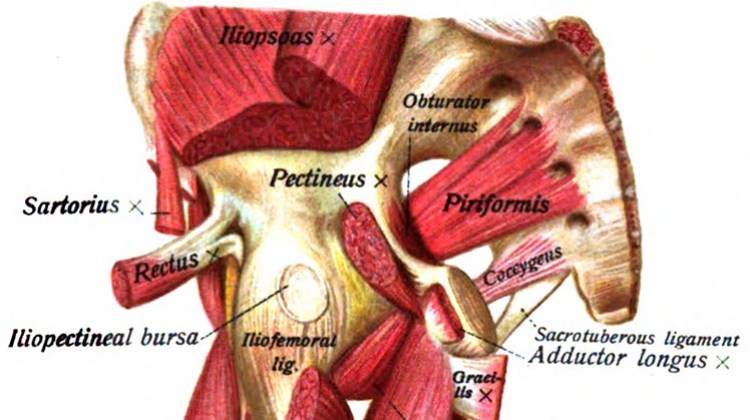
 The piriformis muscle and other major muscles surrounding it. Anatomical drawing by Beth Ohara – Own work, CC BY-SA 3.0
Related Post: How to Prevent and Treat Iliotibial Band Syndrome (ITBS)
Anatomy and Function of the Piriformis Muscle
The piriformis is a flat, band-like, pear-shaped muscle located in the gluteal region. As you can see in the pictures, it basically joins the sacrum to the top of the leg (the femur – your upper leg bone). As such, it sees a lot of action when you are spinning your cranks.
The piriformis originates from the anterior (front) surface of the sacrum, goes through the greater sciatic foramen, and attaches to the greater trochanter of the femur. This muscle plays a crucial role in stabilizing the hip joint and facilitating movements such as external rotation and abduction of the thigh. Obviously you have two of them, one on each side of your butt.
Notably, the sciatic nerve typically passes beneath the piriformis muscle, but in some people, anatomical variations may cause the nerve to pass through or over the muscle, potentially increasing the risk of nerve compression.

 The piriformis muscle, seen from the front. By Dr. Johannes Sobotta – Sobotta’s Atlas and Text-book of Human Anatomy 1909, Public Domain
What Causes Piriformis Inflammation?
Poor Bike and Saddle Fit
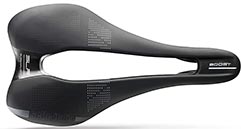
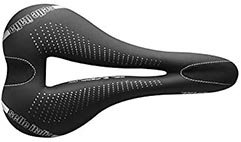
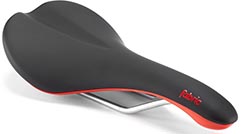
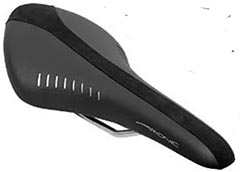
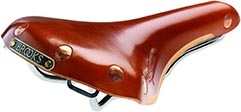
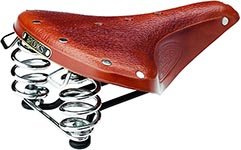
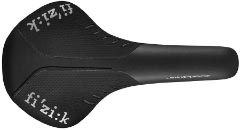
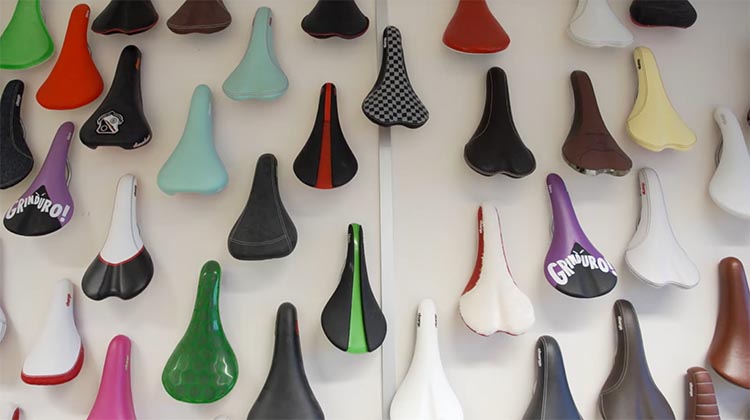
Inflammation of the piriformis muscles can result from riding a bike that does not fit you, using the wrong saddle, or simply riding more than the muscle can sustain for its current level of development. The piriformis muscles basically span the two sides of your butt. So it is not hard to imagine how two hours on a poorly fitting saddle could make your piriformis muscles extremely unhappy. It is vital to have a perfectly fitted bike, and also to have a saddle that is exactly right for you.
Relevant Post: How to Choose and Fit the Right Bike Saddle
Relevant Post: 9 of the Best Road Bike Saddles
Helpful Post: Complete Bike Frame Size Guide – Bike Frame Measurement and Size Charts
 |  |  |  |  |
| Usually about $170 - Please Click Here to See the Best Price on Amazon right now | Usually less than $140 - Please Click Here to See the Best Price on Amazon right now | Best Price on Amazon right now: | Best Price on Amazon right now: | Usually about $100 - Please Click Here to See the Best Price on Amazon right now |
 |  |  |  | |
| Usually about $190 - Please Click Here to See the Best Price on Amazon right now | Best Price on Amazon right now: | Best Price on Amazon right now: | Best Price on Amazon right now: | |
Sitting on Your Wallet
Another cause of Piriformis Syndrome can be simply sitting on your wallet! If you carry your wallet in your back pocket, and sit on it for hours, it can compress one side of your buttocks more than the other. This can lead to reduced blood flow in the buttocks and the gluteus maximus. The insufficient supply to the tissue means metabolic processes can no longer run optimally. Over time, this can inflame the piriformis muscle.
Other Causes
The piriformis can also be inflamed by muscle spasms, hypertrophy (increase in muscle size, such as happens after exercise), or anatomical anomalies, leading to the compression of the sciatic nerve. Factors such as overuse, direct trauma, or prolonged pressure can also cause this inflammatory response. Again, think about bumping along on a cheap saddle for several hours. This can cause trauma to your butt, and all the muscles that constitute your butt.
Piriformis Inflammation in Cyclists
Cycling involves repetitive hip flexion and extension, which can overwork the piriformis muscle, especially if there is an existing muscle imbalance or improper bike ergonomics (a poorly fitted bike or saddle). Prolonged sitting on a bicycle saddle can also exert continuous pressure on the gluteal region, potentially leading to muscle irritation and subsequent inflammation.

 It is not hard to understand how cycling can be tough on the butt
Also, the posture most people adopt while cycling – leaning forward with hips flexed – can increase the compression of the sciatic nerve against the piriformis muscle. This can result in pain, numbness, or tingling that radiates down the leg, mimicking symptoms of sciatica. Many cyclists (including me) have worried that they are developing sciatica, when in fact the root cause is an inflamed piriformis muscle. This is good news in a way, in that it is easier to treat Piriformis Syndrome than to treat sciatica caused by problems in the spine.
Studies have documented cases of Piriformis Syndrome in professional cyclists, underscoring the occupational hazard posed by the sport. Of course, this occupational hazard is more than offset by the occupational rewards of being among the fittest human beings on the planet. However, it hammers home the point that any cyclist can be afflicted by this painful syndrome.
The same factors (poor bike and saddle fit, too many hours in the saddle) that cause piriformis inflammation can also cause all kinds of other problems in the groin area, as explained in our two related posts.
Related Post: Can Cycling Cause Penis Numbness, Erectile Dysfunction, and Prostate Cancer?
Related Post: How Women Cyclists Can Prevent Saddle Soreness and Associated Issues
 |  |
 |  |
Age-Related Prevalence of Piriformis Syndrome
While Piriformis Syndrome can affect individuals of all ages, the available data suggests a higher incidence between the ages of 40 and 60. Some reports indicate a higher prevalence in women, possibly due to anatomical and biomechanical differences. However, specific studies focusing on the prevalence of Piriformis Syndrome in cyclists over 50 are limited, necessitating further research to draw definitive conclusions.
All we know for sure is that cyclists of all ages, genders, and levels can be sidelined by Piriformis Syndrome.
Treatment for Piriformis Syndrome
If you suspect you have Piriformis Syndrome, you should get treatment as fast as possible. The sooner it is treated, the sooner it will be resolved sufficiently for you to get back to your active lifestyle. Diagnosis of Piriformis Syndrome will probably include the medical professional asking you about what movements cause pain, and even just touching your butt. Yes, the clearest indication of Piriformis Syndrome is simply having a sore butt. If your symptoms mimic sciatica, your medical professional may also refer you for a CT scan or an MRI, to rule out more serious causes, such as a herniated disc in your spine.
Management of piriformis inflammation includes both conservative and, in more resistant cases, invasive approaches:
- Rest and Activity Modification: It will be necessary to temporarily reduce or modify activities that exacerbate symptoms, such as cycling or running, to allow the muscle to heal. Yes, I know we all hate to hear that we have to stop cycling for a while, but sometimes there is just no choice.
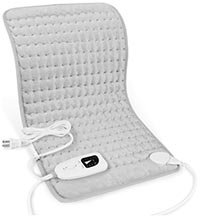
- Heat and Cold. You can try alternating heat and cold to reduce the inflammation. In my case, I found that heat relieved the pain and helped me to heal. I used my trusty old hot pad, which I have used for years for various sore parts of my anatomy that I have over-used or injured.
| |
| |
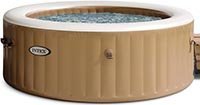
- Hot Tub: If you have access to a hot tub (jacuzzi), the gentle massage of the water will help to speed up your healing process. The best investment I have made in the last ten years has been my relatively cheap inflatable hot tub, which I now use in place of pain killers to alleviate the aches and pains caused by my active lifestyle.
- Sleeping it Off: When sleeping on your side, try placing a pillow between your legs. This can help to reduce the pain. In the acute stages, you will find it necessary to sleep with the painful side up, if you are a side sleeper. Try to alternate from your back to your side frequently, to relieve tension and stimulate blood flow to the muscles.
- Pharmacological Interventions: You can use nonsteroidal anti-inflammatory drugs (NSAIDs) to alleviate pain and reduce inflammation. In my extreme case, I was given a cortisone injection, followed by two weeks of taking pain killers, NSAIDs, and muscle relaxants. I try to avoid medications when possible, but sometimes there is just no other option.
- Physical Therapy: Once you are out of pain, start doing targeted stretching and strengthening exercises to address muscle imbalances and enhance flexibility. This will help to prevent future occurrences.
- Wait Until You Are Pain Free: Note that if you are suffering from acute Piriformis Syndrome and experiencing pain, you should not start stretching and strengthening until you are feeling better. As I have learned with painful slowness, pain is your body’s way of telling you to STOP. We will soon be publishing a post on specific stretches and strengthening exercises that you can do to prevent Piriformis Syndrome.
- Manual Therapies: Try incorporating massage techniques, including deep tissue massage and myofascial release, to relieve muscle tension and improve circulation. But don’t get a deep tissue massage while you are still in pain – it may make matters worse. An already inflamed muscle usually does not want to be vigorously pummeled.
- Injections: Corticosteroid or botulinum toxin injections may be used in cases where conservative measures do not provide relief.
- Surgical Intervention: This is reserved for severe cases that are unresponsive to other treatments, and includes procedures to relieve nerve compression.
Related Post: Exercises and Stretches for Piriformis Syndrome in Cyclists
How to Prevent Piriformis Syndrome
Preventing piriformis inflammation, particularly in cyclists, requires:
- Proper Bike Fit: This is the most important aspect. Ensure your bike is appropriately adjusted to your own dimensions to prevent undue stress on the gluteal muscles. One way to be certain that your bike is right for you is to have a professional bike fit, done by a physiotherapist who specializes in bike fitting.
If you cannot afford a professional bike fit, or don’t want to spend that much money, it is possible to do it yourself. Below is a very highly rated book called Bike Fit that will show you how to do it. The author is a globally renowned expert on the subject.


- Ergonomic Considerations: Use ergonomic seating wherever possible, and take regular breaks during prolonged periods of sitting or cycling to reduce pressure on the piriformis muscle. If you are doing a long bike ride, take regular breaks to give your piriformis a rest, and to do some stretching. If you are an office worker, take regular breaks from your desk to stand up, stretch, and take a short walk.
- Gradual Training Progression: Avoid sudden increases in training intensity or duration to prevent overuse injuries.
- Cross-Training: Engage in diverse physical activities to promote overall muscle balance and prevent overloading specific muscle groups. I like to include swimming, resistance workouts, and yoga to balance my cycling. (And yet I still developed Piriformis Syndrome, but I suspect that was due to my bike being a little too small.)
- Regular Stretching and Strengthening: Incorporate exercises that enhance flexibility and strength of the hip abductors, adductors, and gluteal muscles to maintain muscular balance. Doctors recommend that we stretch two to three times a day, and also stretch for at least 5 to 10 minutes before we ride. Now check out our post that demonstrates crucial exercises and stretches for Piriformis Syndrome.
Related Post: Complete Guide to Stretching for Cyclists
 | |  |
Conclusion
Piriformis inflammation is a significant concern for cyclists due to the sport’s repetitive and prolonged demands on the butt muscles. Understanding the underlying anatomy, recognizing the contributing factors, and using both therapeutic and preventive measures are essential steps in managing and mitigating this condition. Basically, remember that your butt is sensitive, ensure that your bike and saddle fit you perfectly, and be sure to do other exercises apart from cycling, including cross-training, and appropriate stretches and strengthening exercises.
| |
| |
References Used in this Post
Chang, A., Ly, N., & Varacallo, M. (2023). Piriformis syndrome. In StatPearls. StatPearls Publishing. Retrieved from https://www.ncbi.nlm.nih.gov/books/NBK448172/
Ergon Bike. (n.d.). Piriformis syndrome. Retrieved from https://www.ergonbike.com/en/article-piriformis-syndrom
Menu, P., Fouasson-Chaillou, A., Dubois, C., & Dauty, M. (2014). Piriformis syndrome diagnosis: On two professional cyclists. Annals of Physical and Rehabilitation Medicine, 57(4), 268-274. https://doi.org/10.1016/j.rehab.2014.02.006
Peak Form Health Center. (n.d.). Piriformis syndrome part II – Evaluation. Retrieved from https://www.peakformhealthcenter.com/piriformis-syndrome-part-ii-evaluation/
Piriformis Syndrome and Cycling. Simplewellness.com.au
Piriformis syndrome when cycling – the Zommunique.
StatPearls. (2023). Piriformis syndrome. Retrieved from https://www.ncbi.nlm.nih.gov/books/NBK448172/
Related Medical Posts for Cyclists
Related Post: Exercise Doesn’t Help with Fat Loss – A Myth that Needs to be Busted?
Related Post: How to Come Back from a Cycling Injury
Related Post: Four Steps to Prevent and Recover from Cyclist’s Knee (Patellar Tendinitis)
Related Post: How to Modify Your Bike to Cycle with Thumb Arthritis (CMC Arthritis) or De Quervain’s Tenosynovitis
Related Post: Can Cycling Cause Penis Numbness, Erectile Dysfunction, and Prostate Cancer?
Related Post: 3 Easy Tips for Preventing Plantar Fasciitis – and 5 Simple Exercises to Cure It
Related Post: How to Prevent and Treat Iliotibial Band Syndrome (ITBS)
Related Post: Returning to Cycling and Swimming after Severe Piriformis Syndrome: A Step-by-Step Plan
Related Post: A Step-by-step Guide to Returning to Cycling After Severe Piriformis Syndrome
Related Post: Exercises and Stretches for Piriformis Syndrome in Cyclists
Related Post: How to Cure Cycling Knee Pain with a Miraculous, Cheap Cure
Related Post: 5 Doctor’s Tips to Start Cycling Again after Knee Replacement Surgery
Related Post: Science Shows that Exercise is a Miracle Cure and Protects You from Diseases
Related Post: 7 Ways to Prevent Cycling Knee Pain
Related Post: Video: 3 Exercises for Cycling Knee Pain
Check Out Our Most Popular Posts! | ||
| ||
Did you enjoy this post or find it helpful? If so, please support our blog! We write this blog because we love cycling. But we also need to earn a living, so we would appreciate it very much if you click through to one of our reputable affiliates for your online shopping. We are proudly affiliated with Amazon, which sells pretty much everything, and has outstanding shipping and return policies. When you buy from our affiliates we make a small commission, and this is the only way we earn any income. Plus, it costs you nothing at all - a real win/win situation! We here at Average Joe Cyclist do not receive any information AT ALL about who you are, where you live, or what your dog's name is. Buying through our Amazon links is simply an anonymous way to thank us for our efforts, like tossing a few coins in a tip jar. Except that it is Amazon who tosses the coins, not you! | ||













Leave a Reply