
In this post we present evidence that shows clearly that cycling really does help to fight aging. The findings suggest that it is possible to fight aging with cycling. And with other types of exercise too, of course.
Related Post: The Best Cycling Workouts for Longevity: Why Zone 2 Might Be the Most Powerful Ride of Your Life
Related Post: How to Get Bike Fit: Complete Bike Training Plan
We all know that everything goes south as we age. Anyone over 30 has experienced the horror of noticing yet another ache or pain, yet another wrinkle that definitely was NOT there yesterday, and yet another part of our body that has mysteriously started to surrender to gravity and sag earthwards.
 |  |
 |  |
 | |
Is the Problem Aging or Inactivity?
But what we are NOT sure about is just how much of this decay is due to the ravages of time, and how much is caused by the years of inactive time we spend at our desks and on our couches. Researcher Stephen Harridge at King’s College London wanted to see just how much an active lifestyle could fight aging. He says:
“We wanted to understand what happens to the functioning of our bodies as we get older if we take the best-case scenario.”

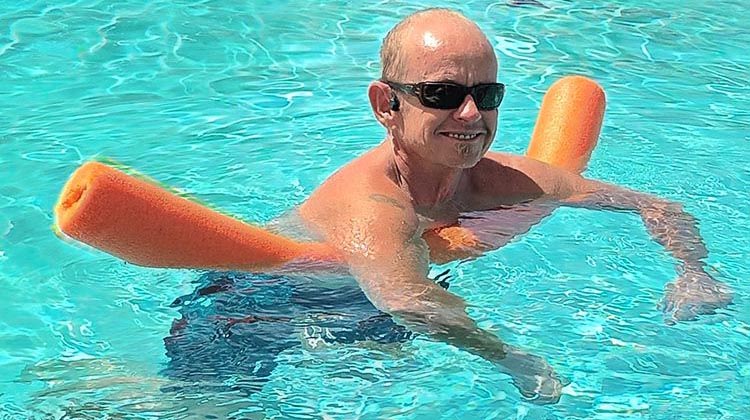
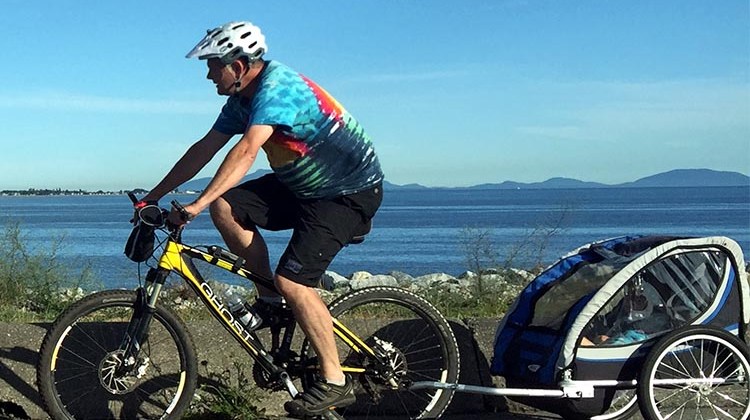
 Harridge’s team of researchers studied a group of older people who regularly swing a leg over (a bike), and compared them to standard benchmarks of what we think of as normal aging. Such as our friend Wayne, who is in better shape than most men half his age – thanks in large part to years of cycling
Related Post: Case Studies: 3 Seniors who Regained their Health with E-Bikes
Harridge’s team of researchers studied a group of older people who regularly swing a leg over (a bike), and compared them to standard benchmarks of what we think of as normal aging. This very active group included 85 men and 41 women between 55 and 79 who regularly cycle. These were not competitive athletes, but they were certainly serious recreational cyclists. Not a couch potato among them. The researchers ensured this by setting a high physical benchmark for people to be included in the research.
Related Post: 5 Great Reasons to Take Up Cycling when You Retire
The group had to be able to bike at least 37 miles in 5.5 hours (the women) and 62 miles in 6.5 hours (the men). These are benchmarks found in older people with a high level of fitness.


Cognitive and Physical Tests
The test subjects were subjected to a large number of both cognitive and physical tests. Their endurance capacity, muscular mass and strength, pedaling power, metabolic health, balance, memory function, bone density and reflexes were all measured. They also did the Timed Up and Go Test – in which you have to stand up from a chair without the assistance of your arms, walk 10 feet, turn, walk back, and sit down again.
The results were very encouraging. The cyclists’ physical and mental abilities were more like the abilities of young adults than of older people.
Related Post: Science Shows HIIT on a Bike is the Best Exercise to Fight Aging – And We Show You How to Do it
|  |
| |
 | |
Clear Evidence that Cycling Fights Aging
In fact, the cyclists quite simply did not act their age in almost all of the tests. The group’s ages spanned almost three decades (55 to 79), but their physical abilities were quite stable across these decades. Even the oldest test subjects had the balance, reflexes, metabolic health and memory ability of young adults – clear evidence that cycling fights aging!


Timed Up and Go Results
Their Timed Up and Go results were especially remarkable. It is considered quite normal for people of their age to need at least 7 seconds to do this test, and many take 9 to 10 seconds. However, even the oldest cyclists could do this test in 5 seconds or less, which is considered normal for healthy young adults.
Astonishing Aerobic Capacity
Also, although aerobic capacity is most closely associated with age, there was such a wide variation in each age range that age could not be determined by aerobic capacity. In other words, some of the older cyclists had the aerobic capacity of a person much younger.
Related: 5 of the Best Budget Indoor Bike Trainers
The overall findings were that the cyclists had managed to successfully fight aging. As Dr. Harridge said:
“If you gave this dataset to a clinician and asked him to predict the age of one of the cyclists based on his or her test results, it would be impossible. This study shows that being physically active makes your body function on the inside more like a young person’s.”
The researchers concluded:
“The data suggest that the relationship between human aging and physiological function is highly individualistic and modified by inactivity.”
Other Evidence that Cycling Can Fight Aging
Of course, this was not the only study that proved that cycling fights aging. In fact, there is a mountain of evidence that cycling (and other exercise of all kinds) fights aging.
Improving Cardiovascular Health
Research has shown that aerobic exercise, such as cycling, plays a significant role in combating the effects of aging. One of the primary ways it does so is by improving cardiovascular health. Aerobic exercise enhances the efficiency of the heart and lungs, which in turn improves circulation and oxygen supply to the entire body. This helps in maintaining the health and function of organs as people age.

 There is a mountain of evidence that cycling (and other aerobic exercise) fights aging. So grab your bike and get out there!
Telomere Length and Cellular Aging
One of the key indicators of cellular aging is the length of telomeres, which are protective caps at the ends of chromosomes. Studies have demonstrated that individuals who engage in regular aerobic exercise tend to have longer telomeres compared to those who are sedentary. This suggests a slower rate of cellular aging and a potential increase in lifespan for those who maintain an active lifestyle. A study published in the Circulation journal by LaRocca et al. (2010) found that endurance exercise was associated with longer telomere length in leukocytes.
Mitochondrial Function
Mitochondria are the powerhouses of cells, and their function tends to decline with age. Aerobic exercise has been shown to enhance mitochondrial function, increasing the capacity for energy production and reducing the buildup of reactive oxygen species, which can damage cells. This is supported by a study in the Journal of Physiology that found improved mitochondrial function in elderly individuals who participated in regular aerobic exercise .
Cognitive Function and Brain Health
Aerobic exercise also benefits brain health. Regular cycling and other forms of aerobic exercise increase blood flow to the brain, promoting the growth of new blood vessels and neurons. This can enhance cognitive function and reduce the risk of neurodegenerative diseases such as Alzheimer’s. A study published in Neurology found that older adults who engaged in regular aerobic exercise had better memory and executive function compared to their sedentary peers .
Musculoskeletal Health
Aerobic exercise helps maintain muscle mass and bone density, which tend to decrease with age. This is particularly important for preventing sarcopenia (age-related muscle loss) and osteoporosis. The American Journal of Medicine published a study indicating that regular physical activity, including cycling, was effective in preserving muscle mass and bone health in older adults.

 Regular physical activity is effective in preserving muscle mass and bone health in older adults
Inflammation and Immune Function
Chronic inflammation and a declining immune system are common in aging. Aerobic exercise has anti-inflammatory effects and can enhance immune function. A study in the Journal of Aging Research highlighted that older adults who engage in regular aerobic exercise had lower levels of inflammatory markers and improved immune responses.
Bottom Line on Whether Cycling Can Fight Aging
Overall, the evidence strongly supports the role of aerobic exercise, such as cycling, in mitigating the effects of aging through various physiological mechanisms, thereby promoting a healthier and potentially longer life.
In short, you can fight aging by cycling. If that’s not enough to make you get on your bike, you MUST be under 30. But as for me – I am definitely motivated!
If YOU want to get fit with cycling, check out Average Joe Cyclist’s Complete Cyclist Training Plan or our Cycling Training Plan for Novices and Complete Beginners.


Related Post: How Strength Training Can Boost Your Cycling Speed and Quality of Life
Related Post: 5 Great Strength Exercises for Cyclists
 | |  |
Sources Used for this Post:
Erickson, K. I., Raji, C. A., Lopez, O. L., et al. (2010). Physical activity predicts gray matter volume in late adulthood: the Cardiovascular Health Study. Neurology, 75(16), 1415-1422.
Gleeson, M., Bishop, N. C., Stensel, D. J., et al. (2011). The anti-inflammatory effects of exercise: mechanisms and implications for the prevention and treatment of disease. Nature Reviews Immunology, 11(9), 607-615.
Lanza, I. R., & Nair, K. S. (2009). Muscle mitochondrial changes with aging and exercise. The Journal of Physiology, 587(Pt 21), 5373-5384.
LaRocca, T. J., Seals, D. R., & Pierce, G. L. (2010). Leukocyte telomere length is preserved with aging in endurance exercise-trained adults and related to maximal aerobic capacity. Circulation, 122(24), 2531-2540.
Pollock Ross D., et al. An investigation into the relationship between age and physiological function in highly active older adults. First published: 6 January 2015. https://doi.org/10.1113/jphysiol.2014.282863
Werner, C., Fürster, T., Widmann, T., et al. (2009). Physical exercise prevents cellular senescence in circulating leukocytes and in the vessel wall. Circulation, 120(24), 2438-2447.
Wolfe, R. R. (2006). The underappreciated role of muscle in health and disease. The American Journal of Clinical Nutrition, 84(3), 475-482.

 Yes, cycling DOES fight aging!
Related Posts:
Related: 7 Tips to Help You Keep Mountain Biking after Age 40
Post: Science Says Cycling Protects You from Dread Diseases and is a Miracle Cure
Article: Science Says Cycling Helps to Keep You Strong as You Age
Related Post: Cycling Training Plan for Novices and Complete Beginners
Check Out Our Most Popular Posts! | ||
| ||
Did you enjoy this post or find it helpful? If so, please support our blog!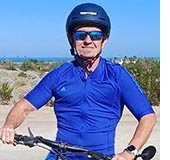 We write this blog because we love cycling. But we also need to earn a living, so we would appreciate it very much if you click through to one of our reputable affiliates for your online shopping. We are proudly affiliated with Amazon, which sells pretty much everything, and has outstanding shipping and return policies. When you buy from our affiliates we make a small commission, and this is the only way we earn any income. Plus, it costs you nothing at all - a real win/win situation! We here at Average Joe Cyclist do not receive any information AT ALL about who you are, where you live, or what your dog's name is. Buying through our Amazon links is simply an anonymous way to thank us for our efforts, like tossing a few coins in a tip jar. Except that it is Amazon who tosses the coins, not you! | ||






Leave a Reply