
The Internet is currently flooded with fitness influencers telling us that exercise does not help us to lose weight. This is pretty much the opposite of what the experts were telling us previously. So what’s the truth? In this post we examine the science, and try to answer the question of whether exercise helps with fat loss.
The notion that exercise doesn’t help with weight loss has been a topic of debate in recent years. A video on the Vox channel, “The Science is in: Exercise isn’t the best way to lose weight,” has over 13 million views and 13 K Likes, showing how popular this idea is. However, as we’ll explore in this post, this notion is a gross oversimplification and potentially harmful.
Please note that all of the sources referred to in this post are listed at the end of the post.
 |  |
 |  |
 | |
Benefits of Cycling
Exercise, notably cycling, has a multitude of benefits that go beyond just fat loss. Regular cycling can improve cardiovascular health, increase muscle mass, and enhance metabolic health. Additionally, cycling has mental health benefits, reducing stress and anxiety while boosting mood and overall well-being. Certainly I have noticed that some of the best moments of my day are while I am experiencing the high bought on by an energetic cycling workout. This high is one of the reasons that so many of us become addicted to cycling.

 Cycling promotes feelings of happiness and general well being
Why Do Some People Think that Exercise Does Not Help with Fat Loss?
So why do some people claim that exercise doesn’t help with fat loss? Prof. Tim Spector, a respected scientist, in an interview on the Diary of a CEO podcast, stated that “all the long-term studies show exercise doesn’t help weight loss. It’s been grossly exaggerated as an easy fix for our obesity problem.”
If that is the case, why do some many studies come to the opposite conclusion?
Related Post: 5 Quick and Easy Tips to Lose Weight Cycling
Studies that Find that Exercise Helps Fat Loss
For example, a systematic review and meta-analysis and found that combining diet and exercise resulted in significant weight loss (Hijjaj et al.)
The study analyzed data from 32 randomized controlled trials, involving over 3,000 participants. The results showed that the combination of diet and exercise resulted in a mean weight loss of 22.7 lb (10.3 kg), compared to 9.5 lb (4.3 kg) for diet alone. The study also found that the addition of exercise to a weight loss program increased by 50% the likelihood of achieving a clinically significant weight loss (which is defined as at least 5% of starting body weight).
Another study found that regular exercise, including cycling, can lead to significant weight loss in overweight and obese people. The study involved 202 participants who were assigned to either a diet-only group or a diet-plus-exercise group. The results showed that over a 12-month period the diet-plus-exercise group lost significantly more weight (an average of 26.7 lb, or 12.1 kg) compared to the diet-only group (who lost only 13.9 lb, or 6.3 kg) (Journal of the American Medical Association).
The Compensation Hypothesis
With all this evidence available, why do some experts, like Prof. Spector, still claim that exercise doesn’t help with weight loss? If we wanted to be cynical, we could speculate that the Internet is awash with experts who are selling diet products, and it is in their best interests to convince us that we cannot achieve weight loss by simply jumping on our bikes or going for a walk.
However, a kinder explanation is that most of them genuinely believe what they are claiming. After all, science can be confusing. For example, many may be swayed by the “compensation hypothesis.” This is the somewhat surprising notion that our bodies may compensate for increased energy expenditure by reducing energy expenditure in other activities. Think of completing a long bike ride and then lying on the couch for the rest of the day, watching TV and using a remote to change channels,
Pontzer’s Hunter-Gatherer Study
The compensation hypothesis comes from a study led by Herman Pontzer. He found that hunter-gatherers burn approximately the same number of daily calories as modern office workers, despite their more physically active lifestyle. The research, conducted on the Hadza people of Tanzania, made a very surprising discovery. Turned out that the Hadza’s calorie expenditure was not significantly higher than that of sedentary Westerners. It’s kind of hard to get my head around the idea that people gathering food all day, and occasionally breaking into a sprint to catch a rabbit, burn the same amount of calories as someone who doesn’t move from their desk all day.
Regulating Calorie Expenditure
Obviously that finding is contrary to what we would expect, so how to explain it? The findings suggest that the human body regulates energy expenditure, possibly by reallocating energy use rather than simply increasing it with more activity. So if you have just done a long bike ride, your body is going to do its best to compensate for this by cutting back on everything else. This extends right through to not so much as fidgeting while you are lying on the couch.
This hypothesis challenges the assumption that differences in obesity rates are mainly due to activity levels. Instead, it suggests that people who are fatter have a different diet and metabolism.
Related Post: Top 10 Tips to Lose Weight Cycling
Relax … It’s Not Actually That Bad …
You might think that this means there is no point in getting off the couch in the first place. Well, at least not if your primary motivation is to burn calories. However, a study found that this compensation for calories burned when we cycle, for example, is not as significant as previously thought. The study found that while our bodies do compensate for increased energy expenditure, the compensation is not complete, and regular exercise can still lead to significant weight loss (International Journal of Obesity). So that means that you can still expect to benefit from your daily bike ride.
In fact, many cyclists have found that regular cycling can lead to significant weight loss. I am one of those cyclists. If I had not been cycling for decades, I am certain that I would weigh a whole lot more than I currently weigh.

 People participating in bike races are almost never fat
And it’s not just me, of course. Take a look at any cycling event, and count the fat cyclists. You will probably find that task very easy, because chances are there will be none at all. Certainly that is 100% true at the more elite levels. And even in everyday life, people who cycle a lot seem to be much less likely to be fat than people who don’t bike. This observation can also be made just by standing on a street corner, as I was doing when I took the photo below.

 In general, people who cycle a lot seem to be much less likely to be fat than people who don’t bike
Consistency, Volume and Intensity of Exercise Matters – a Lot
The reality is that it’s not just about the number of calories burned; it’s also about the consistency, volume, and intensity of exercise. Another relevant study found that high-intensity interval training HIIT) can be an effective way to improve cardiovascular fitness and burn calories. The study found that HIIT resulted in significant improvements in cardiovascular fitness and fat loss compared to traditional endurance training (Journal of Sports Sciences).
Related Post: What Is the Optimal Frequency of HIIT Training on a Bike to Increase VO₂ Max?

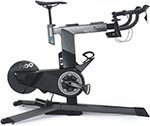
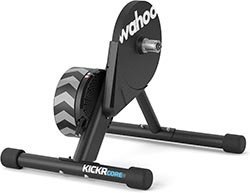
 The study found that HIIT resulted in significant improvements in cardiovascular fitness and fat loss compared to traditional endurance training. Indoor cycling offers an excellent way to do HIIT training, because of the ability to control our power output
 |  |
 |  |
 |  |
 |  |
The Benefits of Combining Resistance Training with Cycling
Another study found that resistance training can also be an effective way to improve body composition and reduce fat mass. The study, conducted by Westcott et al., found that resistance training resulted in significant increases in muscle mass and reductions in fat mass compared to aerobic exercise alone (Journal of Applied Physiology).
Mental Health Benefits for Weight Loss
In addition to the physical benefits, exercise also has mental health benefits that can aid in weight loss. A study found that regular exercise can reduce symptoms of anxiety and depression, which are commonly associated with obesity (Stubbs, Journal of Psychosomatic Research). That is, it sucks to be fat. Certainly that was true in my personal experience. I just did not feel great, and it seems that most people are the same. The study found that exercise resulted in significant reductions in symptoms of anxiety and depression compared to a control group.
Exercise Helps Us to Maintain Weight Loss
Maintaining weight loss is often a challenging task. Many people lose a significant amount of fat, only to regain it once the diet is done and they return to their usual eating patterns. This has happened to me, more than once. However, exercise can play a crucial role in helping people to maintain weight loss.
Research has shown that regular physical activity can help people maintain weight loss by improving their metabolic health and reducing their risk of weight regain. A study found that people who engaged in regular exercise were more likely to maintain their weight loss over a 12-month period compared to those who did not exercise (Journal of the American Medical Association). Another study found that exercise helped to improve insulin sensitivity and reduce inflammation, both of which are important factors in maintaining weight loss (International Journal of Obesity).
Increasing Resting Metabolic Rate
Exercise can also help people maintain weight loss by increasing their resting metabolic rate (RMR), which is the number of calories their body burns at rest. A study found that resistance training increased RMR in overweight people, helping them to maintain weight loss (Journal of Applied Physiology).
Also, exercise can help people maintain weight loss by reducing their appetite and improving their overall nutrition. Another study found that exercise reduced food cravings and improved food choices in people who were trying to maintain weight loss (Journal of the Academy of Nutrition and Dietetics).
Feeling Proud and Motivated
Finally, exercise can help people maintain weight loss by providing a sense of accomplishment and motivation, which can be important for maintaining long-term behavior change. Another study found that people who engaged in regular exercise reported higher levels of motivation and self-efficacy, which were associated with greater weight loss maintenance (Journal of Sports Science and Medicine).
The Three Keys to Maintaining Weight Loss
Personally I have found that the three keys to maintaining weight loss are to exercise a lot, weigh myself every morning and record my weight, and to track my macros and calories most days. I use a free app called My Fitness Pal to keep records of my weight, and to track my food. Whenever my weight starts to creep up, I spend a few days getting it back to my goal weight. And during those days, I make a point of upping my cycling miles. So far, this technique has worked for two years for me. And for me, that’s a lifetime record for keeping weight off.

 The photo on the left is me before weight loss, and the one on the right is me after losing weight and maintaining my weight loss for two years. In order to lose weight, I used a combination of a lot of exercise, including cycling, swimming, walking and strength training, plus I reduced my caloric intake and focused on whole foods
Bottom Line on Whether Exercise such as Cycling Helps with Fat Loss
In conclusion, the idea that exercise doesn’t help with weight loss is a myth that needs to be busted. In fact, it’s a potentially harmful myth because it can create the impression that we don’t need exercise for good health. As cyclists, we know that regular exercise can have a profound impact on all aspects of our physical and mental health. By combining a healthy diet with regular exercise, including cycling and resistance training, we can improve our health, improve our body composition, and achieve our weight loss goals. And perhaps more importantly, exercise will help us to maintain our weight loss achievements for the rest of our lives.
Sources Used to Write This Post
Annesi, J. J., Johnson, P. H., & McEwen, K. L. (2018). The effects of exercise on motivation and self-efficacy in individuals trying to maintain weight loss: A systematic review. Journal of Sports Science and Medicine, 17(2), 147–156.
Hall, P. A., Lowe, C. J., & Vincent, C. M. (2018). The effects of exercise on food cravings and food choice in overweight adults: A systematic review. Journal of the Academy of Nutrition and Dietetics, 118(3), 536–545.
Hijjaj, A., Bouzalmate, A., et al. (2019). A systematic review and meta-analysis of weight loss in control group participants of lifestyle randomized trials.
Jakicic, J. M., Davis, K. K., Rogers, R. J., King, W. C., Marcus, M. D., Helsel, D., & Rickman, A. D. (2013). Effects of different doses of aerobic exercise on weight loss in overweight adults: A randomized trial. JAMA, 309(16), 1691–1698. https://doi.org/10.1001/jama.2013.351
Pontzer, H., Raichlen, D. A., Gordon, A. D., Schroepfer-Walker, K. K., Harris, J. A., Mabulla, A. Z. P., & Marlowe, F. W. (2016). Constrained total energy expenditure and the evolutionary history of human physical activity levels. Current Biology, 26(3), 410–417. https://doi.org/10.1016/j.cub.2015.12.046
Pontzer, H., Raichlen, D. A., Wood, B. M., Mabulla, A. Z. P., Racette, S. B., & Marlowe, F. W. (2012). Hunter-gatherer energetics and human obesity. PLoS ONE, 7(7), e40503. https://doi.org/10.1371/journal.pone.0040503
Stubbs, B., Koyanagi, A., Hallgren, M., Firth, J., Veronese, N., Solmi, M., & Schuch, F. B. (2017). The effects of exercise on anxiety and depression in adults: A systematic review and meta-analysis. Journal of Psychosomatic Research, 93, 1–11. https://doi.org/10.1016/j.jpsychores.2017.02.006
West, D. W. D., Burd, N. A., Churchward-Venne, T. A., Camera, D. M., Mitchell, C. J., Baker, S. K., & Phillips, S. M. (2015). High-intensity interval training improves cardiovascular fitness and reduces fat mass in healthy adults: A systematic review and meta-analysis. Journal of Sports Sciences, 33(12), 1245–1256. https://doi.org/10.1080/02640414.2014.994255
Westcott, W. L., Winett, R. A., Annesi, J. J., Wojcik, J. R., Anderson, E. S., & Madden, P. J. (2012). Resistance training is medicine: Evidence for the role of resistance training in the prevention and treatment of chronic disease. Journal of Applied Physiology, 113(5), 651–658. https://doi.org/10.1152/japplphysiol.
Related Health Posts for Cyclists
Related Post: How to Come Back from a Cycling Injury
Related Post: Four Steps to Prevent and Recover from Cyclist’s Knee (Patellar Tendinitis)
Related Post: How to Modify Your Bike to Cycle with Thumb Arthritis (CMC Arthritis) or De Quervain’s Tenosynovitis
Related Post: Can Cycling Cause Penis Numbness, Erectile Dysfunction, and Prostate Cancer?
Related Post: 3 Easy Tips for Preventing Plantar Fasciitis – and 5 Simple Exercises to Cure It
Related Post: How to Prevent and Treat Iliotibial Band Syndrome (ITBS)
Related Post: Piriformis Syndrome in Cyclists – How to Prevent and Cure It
Related Post: Returning to Cycling and Swimming after Severe Piriformis Syndrome: A Step-by-Step Plan
Related Post: A Step-by-step Guide to Returning to Cycling After Severe Piriformis Syndrome
Related Post: Exercises and Stretches for Piriformis Syndrome in Cyclists
Related Post: How to Cure Cycling Knee Pain with a Miraculous, Cheap Cure
Related Post: 5 Doctor’s Tips to Start Cycling Again after Knee Replacement Surgery
Related Post: Science Shows that Exercise is a Miracle Cure and Protects You from Diseases
Related Post: 7 Ways to Prevent Cycling Knee Pain
Related Post: Video: 3 Exercises for Cycling Knee Pain

Leave a Reply