
This post describes four steps you can take to prevent and recover from cyclist’s knee (also called patellar tendinitis). This is is a painful condition that affects a lot of cyclists, forcing us to take time off cycling. This post will help you get back to cycling as fast as possible.
What is Patellar Tendonitis (Cyclist’s Knee), and Why Does it Affect Cyclists?
Patellar tendonitis, also known as “cyclist’s knee,” (and sometimes called “jumper’s knee) is an overuse injury that causes pain and inflammation in the patellar tendon—the thick band of tissue that connects the kneecap (patella) to the shinbone (tibia). This tendon plays a key role in helping the quadriceps (thigh muscles) extend the knee, which is essential for movements like jumping, running, and cycling.
Why Does Patellar Tendonitis Affect Cyclists?
Cyclists are prone to patellar tendonitis because of the repetitive motion and high stress placed on the quadriceps during pedaling. Several factors can contribute to this condition:
- Overuse and High Training Volume: Long rides and frequent training sessions can put excessive strain on the patellar tendon, leading to irritation and inflammation.
- Bike Fit Issues: An improper saddle height—especially if it’s too low—can force the knee into a more compressed position, increasing stress on the patellar tendon.
- Pedaling Technique: A heavy reliance on pushing big gears instead of maintaining a smooth cadence can put extra strain on the quadriceps and tendon.
- Muscle Imbalances or Weakness: Weak hamstrings, glutes, or core muscles can cause the quadriceps to overcompensate, increasing tension on the patellar tendon.
- Cleat Positioning: If cycling shoes are set up incorrectly, they can alter knee tracking and increase strain on the tendon.
Related Post: How to Find the Right Height and Setback for Your Bike Saddle
Symptoms and Prevention of Cyclist’s Knee
The main symptom of patellar tendonitis is pain just below the kneecap, which may start as mild discomfort and worsen over time. Cyclists can prevent this condition by ensuring proper bike fit, gradually increasing training intensity, strengthening supporting muscles, and using a higher cadence to reduce strain on the knees. If symptoms appear, rest, stretching, and ice can help manage inflammation before it worsens.
Your own case of cyclist’s knee may present differently. In my case, patellar tendinitis or cyclist’s knee presented as a fleeting sharp pain in the shin bone just below the knee. This usually happened when I was walking and made sudden turns.

 The patella tendon connects the kneecap (patella) to the top of the shinbone (tibial tuberosity
The patella tendon connects the kneecap (patella) to the top of the shinbone (tibial tuberosity) and helps straighten the knee by transferring force from the quadriceps (front thigh muscles).
 |  |
 |  |
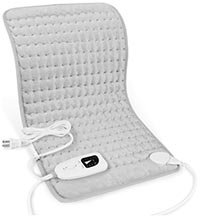
 About $55. Please click here for current best price on Amazon. |  |
 | |
Many cyclists experience pain in the patella tendon, which makes sense since the quadriceps generate most of the power when pedaling. If you use cleats, your quadriceps work even harder throughout each pedal stroke, increasing the strain on this tendon.
If patellar tendinitis (cyclist’s knee) is keeping you off your bike, the best approach is to reduce the inflammation, restore mobility, and strengthen key muscles. In the meantime, ensure that your bike fit is optimized. The goal is to return to cycling as soon as possible without reinjury.
Related Post: How to Find the Right Height and Setback for Your Bike Saddle
1. Immediate Care for Cyclist’s Knee (First Few Days to a Week)
Rest and Activity Modification
- Reduce or pause cycling until pain subsides. Light pedaling on low resistance may be okay if it doesn’t cause discomfort.
- Avoid high-gear, high-resistance cycling, steep climbs, and long rides.
- Pay attention to pain when standing on the pedals or pushing hard—this indicates the tendon is still aggravated.
Ice Therapy
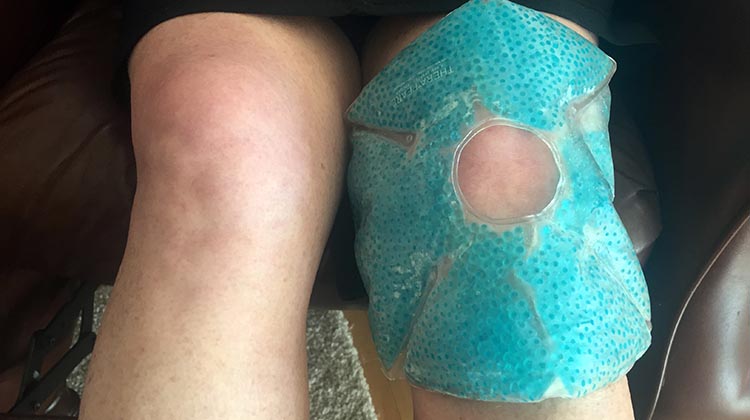
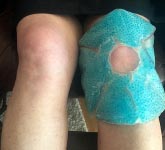
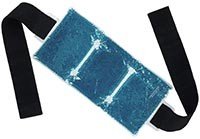
- Apply ice for 15-20 minutes after riding or when pain flares up. In acute cases, take a two hour break after icing, and then repeat. And then do it again. And again!
- Use a towel or t-shirt between the ice pack and skin to avoid frostbite.

Anti-Inflammatories (If Needed)
- A short course of NSAIDs (ibuprofen, diclofenac or naproxen) can help with pain and swelling.
- Long-term use isn’t recommended, as it may slow tendon healing.
 |  |  |
 |  |  |
2. Adjusting Your Bike Fit (Essential for Long-Term Recovery and Prevention of Cyclist’s Knee )
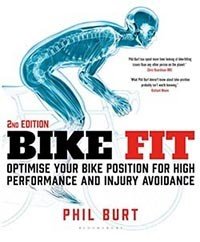
A poorly fitted bike can overload the patellar tendon. Either hire a professional, use an AI app such as MyVeloFit, or buy the book below and do it yourself. Here’s what to check:
- Saddle Height – If your saddle is too low, it increases stress on the patellar tendon. Raise your saddle slightly so your knee has a 25-35° bend at the bottom of the pedal stroke. To get your saddle height dialed in perfectly, check out our post How to Find the Right Height and Setback for Your Bike Saddle.
- Saddle Position – A saddle that’s too far forward forces excessive knee flexion. Move it back slightly to reduce strain.
- Crank Arm Length – Shorter crank arms may help if you experience knee pain with each pedal stroke.
- Cleat Position – If using clipless pedals, ensure cleats are positioned correctly. A slight outward rotation can reduce knee stress.


3. Rehabilitation Phase (After Acute Pain of Cyclist’s Knee Subsides)
Once pain is reduced, introduce targeted stretching and strengthening to support knee stability and prevent recurrence.
Stretching Exercises (Daily, hold for 30 seconds each)
Quadriceps Stretch – Stand on one leg and pull the opposite foot toward your glutes to stretch the front of your thigh.

 Quadriceps stretch. Our thanks to our model, Emily Goodwill
Hamstring Stretch – Sit with one leg extended and reach toward your toes. Helps counteract tight hamstrings that can affect knee mechanics. Regularly stretching your quads and hams will help to prevent a wide range of cycling complications. For a variation, see photo below.

 Another way to stretch your hamstrings is to stand up and put your foot on a chair or low table, then press gently down on the leg
Calf Stretch – Stand facing a wall, place one foot forward, and press into the wall to stretch the back leg. Tight calves can contribute to poor pedaling mechanics.
 | |  |

 Calf stretch. Tight calves can contribute to poor pedaling mechanics
Hip Flexor Stretch (Lunge Stretch) – Kneel on one knee and push your hips forward slightly. This can also be done in a standing position. Cycling tightens hip flexors, which can pull on the knee. For an illustrated and detailed post that includes ways to stretch and strengthen your hip flexors, see Exercises and Stretches for Piriformis Syndrome in Cyclists.

 Hip Flexor Stretch (Lunge Stretch). Our thanks to our model, fitness coach Wendy Orsten. This stretches your hip flexors, glutes, quadriceps, and inner thighs. It can also help improve your flexibility
Strengthening Exercises for Cyclist’s Knee (3-4 times per week, 3 sets of 10-15 reps)
Straight-Leg Raises – Lie down, keep one leg straight, and lift it while engaging the quadriceps. This builds knee stability without stressing the tendon.
Eccentric Squats (Slow Descents) – Slowly lower into a squat position, emphasizing a controlled descent. Eccentric training strengthens the patellar tendon.
Step-Downs – Stand on a low step and slowly lower one foot to the floor. Then raise it back up again. Repeat with the same foot for 10 reps, and then do the same with the other foot. Simulates the downward pedal stroke while building knee control.
Glute Bridges – Strengthen the glutes and hips, taking strain off the knee. Start flat on your back, then bend your knees, and then slowly raise your hips. Be sure to hold the position and squeeze your glutes for at least 5 seconds before slowly lowering back to the ground.

Calf Raises – Strengthens lower leg muscles for a more stable pedal stroke. Stand on one foot and raise your heel as high as possible. Then lower it to the ground, and repeat. Go slowly and steadily.
Related Post: Exercises and Stretches for Piriformis Syndrome in Cyclists
4. Returning to Cycling after Cyclist’s Knee (Gradual and Smart)
Once pain subsides, return to cycling gradually:
- Start with flat, low-resistance rides (avoid hills or sprints).
- Keep cadence high (90+ RPM) to reduce knee strain.
- Avoid mashing big gears – opt for smooth, steady pedaling.
- Limit ride duration at first, then increase gradually.
- Stretch and ice after every ride to prevent flare-ups.
5. Long-Term Prevention of Cyclist’s Knee
- Keep up with strength and flexibility training, especially glutes, quads, and hip stabilizers.
- Optimize bike fit and reassess periodically.
- Listen to your body – pain is a signal, not something to push through.
- Foam roll quads, hamstrings, and calves regularly to keep muscles supple.
When Should You See a Doctor for Cyclist’s Knee ?
- If pain persists for more than a few weeks despite rehab efforts.
- If there’s swelling, instability, or sharp pain with every pedal stroke.
- If cycling continues to aggravate the tendon despite adjustments.
Bottom Line on Prevention and Treatment of Cyclist’s Knee
By taking a structured recovery approach and addressing bike fit, you can return to cycling stronger and more resilient — without recurring knee pain. Good luck with your return to cycling!
| | |
Related Medical Posts for Cyclists
Related Post: Exercise Doesn’t Help with Fat Loss – A Myth that Needs to be Busted?
Related Post: How to Come Back from a Cycling Injury
Related Post: Four Steps to Prevent and Recover from Cyclist’s Knee (Patellar Tendinitis)
Related Post: How to Modify Your Bike to Cycle with Thumb Arthritis (CMC Arthritis) or De Quervain’s Tenosynovitis
Related Post: Can Cycling Cause Penis Numbness, Erectile Dysfunction, and Prostate Cancer?
Related Post: 3 Easy Tips for Preventing Plantar Fasciitis – and 5 Simple Exercises to Cure It
Related Post: How to Prevent and Treat Iliotibial Band Syndrome (ITBS)
Related Post: Piriformis Syndrome in Cyclists – How to Prevent and Cure It
 |  |
 |  |
 | |
Related Post: Returning to Cycling and Swimming after Severe Piriformis Syndrome: A Step-by-Step Plan
Related Post: A Step-by-step Guide to Returning to Cycling After Severe Piriformis Syndrome
Related Post: Exercises and Stretches for Piriformis Syndrome in Cyclists
Related Post: How to Cure Cycling Knee Pain with a Miraculous, Cheap Cure
Related Post: 5 Doctor’s Tips to Start Cycling Again after Knee Replacement Surgery
Related Post: Science Shows that Exercise is a Miracle Cure and Protects You from Diseases
Related Post: 7 Ways to Prevent Cycling Knee Pain
Related Post: Video: 3 Exercises for Cycling Knee Pain
Check Out Our Most Popular Posts! | ||
| ||
Did you enjoy this post or find it helpful? If so, please support our blog! We write this blog because we love cycling. But we also need to earn a living, so we would appreciate it very much if you click through to one of our reputable affiliates for your online shopping. We are proudly affiliated with Amazon, which sells pretty much everything, and has outstanding shipping and return policies. When you buy from our affiliates we make a small commission, and this is the only way we earn any income. Plus, it costs you nothing at all - a real win/win situation! We here at Average Joe Cyclist do not receive any information AT ALL about who you are, where you live, or what your dog's name is. Buying through our Amazon links is simply an anonymous way to thank us for our efforts, like tossing a few coins in a tip jar. Except that it is Amazon who tosses the coins, not you! | ||






Leave a Reply