
If you want to boost your endurance, energy, overall health, endurance on your bike, and even your life expectancy, one of the best things you can do is improve your VO₂ max. A higher VO₂ max means your body can use oxygen more efficiently, which is directly linked to longer life expectancy, enhanced fitness, and better quality of life.
The good news? High-Intensity Interval Training (HIIT) on a stationary or moving bike is one of the most effective ways to improve your VO₂ max—and it doesn’t require hours of training each week. So, how often should you do HIIT to get the best results? Let’s break it down.

 High-Intensity Interval Training (HIIT) on a stationary or moving bike is one of the most effective ways to improve your VO₂ max
Related Post: Best Smart Watch to Monitor Your HRV: Garmin vs Fitbit vs Apple vs Samsung
Why Does VO₂ Max Matter?
VO₂ max is a measure of how much oxygen your body can use during exercise. The higher it is, the more efficiently your heart, lungs, and muscles work together. Research shows that having a higher VO₂ max is linked to:
- Lower risk of heart disease, diabetes, and early death
- Better endurance for workouts and daily activities
- Increased energy and faster recovery after exertion
A 2023 study found that for every one metabolic equivalent (MET) increase in fitness, the risk of dying from any cause drops by about 11%.
What Does a One MET Increase Feel Like?
If your fitness improves by one MET, here’s what you might notice:
 |  |
 | 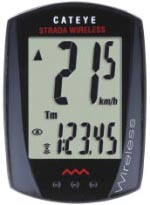 |
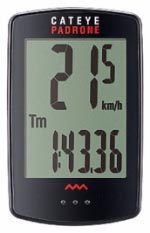 About $55. Please click here for current best price on Amazon. |  |
 | |
- You don’t get winded as quickly when climbing stairs.
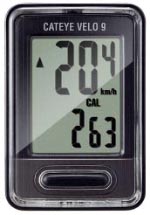
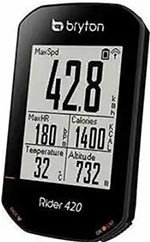
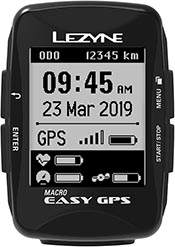
- You can cycle the same distance and put in the same amount of effort, yet move faster and record a higher power output (watts per kg).
- You can walk faster or longer without getting tired.
- Your heart rate is lower at rest and during exercise.
- After a workout, you recover more quickly than before.
In practical terms, a one MET increase means your body can do more with the same effort — or the same activity will feel easier.
Related Post: Unleash Your Cycling Potential: 7 Reasons Why Every Cyclist Should Use a Power Meter
HIIT vs. Moderate-Intensity Training: Which Is Better?
There are two main ways to improve your VO₂ max:
- Moderate-intensity continuous training (MICT) – think steady, moderate-paced cycling for 30–60 minutes. Or think of the hundreds of videos that have appeared on YouTube extolling the miracles that can be achieved with Zone 2 training.
- High-intensity interval training (HIIT) – short bursts of intense effort followed by rest or low-intensity recovery.
Despite all those YouTube videos, research overwhelmingly supports HIIT as the superior method for increasing VO₂ max. A large meta-analysis found that HIIT led to nearly double the VO₂ max improvement compared to moderate-intensity training. (See the Sources list at the end of this post for the research I did.)
Why? HIIT forces your body to push closer to its maximum oxygen usage, triggering faster adaptations.
Related Post: Science Shows HIIT on a Bike is the Best Exercise to Fight Aging – And We Show You How to Do it
What’s the Best HIIT Routine for Cycling?
Studies on stationary cycling have tested different HIIT formats, but one of the most effective looks like this:
Warm-up: 5-10 minutes of easy pedaling
Intervals:
 | |  |
- 30 seconds all-out sprint (at 80-90% of max effort)
- 90 seconds easy pedaling (recovery)
- Repeat 6-8 times
Cool-down: 5 minutes of light pedaling
This whole workout takes just 20-30 minutes, but it packs a punch.
Related Post: 7 Reasons to do High Intensity Interval Training (HIIT) on Your Bike – and How to Do It
Related Post: What is HRV, Why Should I Care, and How Can I Measure It?
Using Cycling Apps to Do a Variety of HIIT Workouts
Apps like Zwift and TrainerRoad make it incredibly easy to train effectively—without spending hours designing your own workout plans. These apps offer structured training plans, automatically adjusting intensity to help you hit your goals while keeping things fun and engaging.

 Apps like Zwift make indoor cycling engaging and fun, making it much easier to do your cycling training
Why Use a Cycling App for HIIT?
Designing High-Intensity Interval Training (HIIT) workouts can be tricky. You need the right mix of work-to-rest ratios, intensity, and progression—which these apps handle for you. Plus, indoor cycling, especially with a smart trainer in ERG mode, makes it easier to execute HIIT workouts precisely because your power output (watts per kg) is controlled for you. No worrying about hills, traffic, or stoplights—just pure, efficient training.
Zwift: Fun, Interactive, and Social
Zwift combines structured training with a video-game-like experience, allowing you to ride through virtual worlds while following pre-designed workouts. Their “Workout Mode” offers tons of HIIT options, from short sprint-focused sessions to VO₂ max intervals.
Best HIIT Features:
- Pre-built HIIT plans (e.g., “FTP Builder,” “VO₂ Booster”)
- Races and group rides that mimic HIIT efforts
- ERG mode compatibility—your trainer automatically adjusts resistance
- Gamified experience keeps motivation high. It sure works for me – I have to hold myself back from spending too much time on Zwift. It’s so much fun that it’s addictive.

 Zwift’s “Workout Mode” offers tons of HIIT options, from short sprint-focused sessions to VO₂ max intervals
If you love a mix of structure and fun, Zwift is a great choice.
TrainerRoad: Data-Driven and Focused on Performance
TrainerRoad is all about structured training and scientific progression. Instead of gamification, it offers a huge library of HIIT workouts and personalized training plans based on your fitness level. Their AI-driven Adaptive Training makes sure every session is optimized for your goals.
Best HIIT Features:
Structured plans for all fitness levels (e.g., “VO₂ Max Progression,” “Short Power Build”)
Precise interval control in ERG mode for targeted improvements
Custom workout creator if you want to tweak intervals
Deep performance analytics to track VO₂ max gains
If you prefer serious training with a data-driven approach, TrainerRoad is perfect for maximizing HIIT benefits.
Integration between TrainerRoad and Zwift
Also, TrainerRoad and Zwift have just integrated, so you have the opportunity to have the best of both worlds. This means you can now perform your TrainerRoad sessions directly within the Zwift platform, merging data-driven training with engaging visuals. Of course, you do have to have accounts in both apps. Monthly subscriptions to both would cost you a little under $40.
In a world where so many apps are free, this seems like a lot of money. But when you compare how much value you would get out of the two training apps, compared to if you spent the money on a pizza, it does not seem so expensive. If you are thinking of it: note that this integration is so new that it is advisable to first research how successful it has been to see if it would work for you.
How Often Should You Do HIIT on a Bike?
For the best VO₂ max gains, most studies recommend 2 to 3 HIIT sessions per week.
 |  |
 |  |
 | |
- 2 sessions/week: Great for beginners or if you’re doing other forms of exercise (like swimming or strength training).
- 3 sessions/week: Ideal if you’re focused on improving endurance quickly.
- 4+ sessions/week: Only recommended for experienced athletes, as it increases injury risk and fatigue.
The key is allowing 48 hours between sessions so your body can recover and adapt.

 Interval training requires intense effort, but brings great rewards for the relatively small amount of time invested
Final Thoughts
If you want to increase your VO₂ max and improve your overall fitness, HIIT on a stationary or regular bike is one of the best things you can do. Two or three short-but-intense sessions per week can make a big difference. And the best part? It doesn’t just help you in the gym—it makes everyday activities easier and gives you more energy for life. So, why not give it a try? Your future self will thank you!
Sources Used in This Post
American Heart Association. (2016). Importance of assessing cardiorespiratory fitness in clinical practice: A case for fitness as a clinical vital sign. Circulation.
Baekkerud, F. H., Solberg, F., Leinan, I. M., Wisløff, U., & Karlsen, T. (2016). Comparison of three popular exercise modalities on VO₂ max in overweight and obese. Medicine & Science in Sports & Exercise.
Health.com. (2025). How to increase VO₂ max and boost your endurance.
Laukkanen, J. A., Isiozor, N. M., & Kunutsor, S. K. (2023). Objectively assessed cardiorespiratory fitness and all-cause mortality risk. Mayo Clinic Proceedings.
Verywell Health. (2024). Understanding and improving your VO₂ max is key to optimal health.

Leave a Reply