If you’re a cyclist looking to optimize your training, recover faster, and push your performance to new heights, Heart Rate Variability (HRV) is a metric you should start paying attention to. If you monitor your HRV properly, it’s like having an early warning system for fatigue, stress, and overtraining. But what exactly is HRV, why does it matter, and how can you track it? Let’s dive in and find out!
Related Post: Best Smart Watch to Monitor Your HRV: Garmin vs Fitbit vs Apple vs Samsung
Cutting to the Chase on the Best HRV Monitor
For those who don’t have the time to read 3600 words, Maggie thought it would be a good idea to mention right here what our recommendations are. So here they are!
Investing in an HRV-capable smartwatch can help you unlock new performance levels while avoiding burnout and overtraining. Whether you go for a premium, high-end Garmin Fenix 7, a magnificent but significantly cheaper Garmin 265, a one-watch-that-does-almost-all Garmin Venu 3S, a mid-range Samsung Galaxy Watch 7, a budget-friendly Fitbit Charge 5, or a downright cheap Fitbit Inspire 3, monitoring your HRV will be a game-changer for your fitness journey. Note that if your primary focus is to get plenty of information about your HRV, the Samsung and the Apple watch will probably not be good enough. You might manage with one of the Fitbits, but the catch there is that you have to pay for a monthly premium membership. Garmin definitely offers the best options for HRV monitoring, and you can review masses of data about yourself for free with Garmin Connect. Garmin also connects seamlessly with Strava. So you can review your data on Strava as well!
Our top recommendation is the very rugged Garmin Instinct 2, because it has everything an athlete needs, and outstanding battery life, but at a much lower price than most of the Garmin line-up of watches. You can read much more about why we love the Instinct 2 further below in this post.


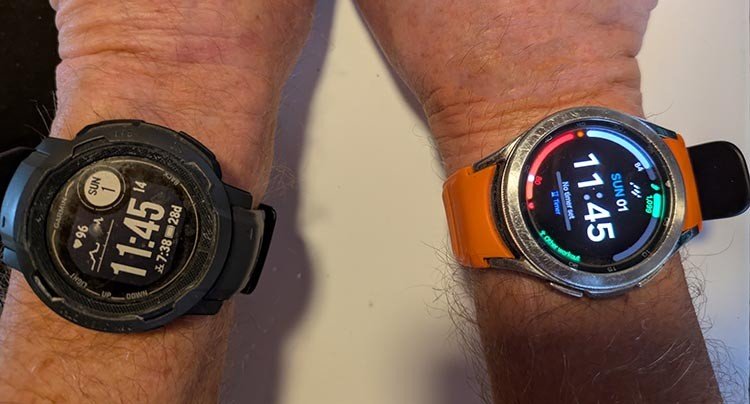
Since I got my Garmin Instinct 2 watch (the one on the left below), I have continued wearing my Samsung Galaxy watch, so that I can compare accuracy. So far, I have been amazed at how much they are in perfect agreement. The difference, of course, is that Garmin collects way more data, and gives it all to you. Oh, and the other vital difference – the Garmin battery lasts for a month, and the Samsung lasts for a day. Finally, the Garmin tells me my HRV any time I like – I just have to take a Health Snapshot. Whereas the Samsung only tells you what your HRV was while you were asleep.

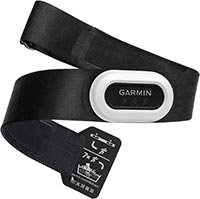
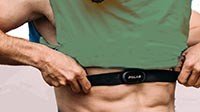
An even cheaper alternative to monitor your HRV is to use an app such as Elite HRV, and pair it up with a heart rate monitor such as a Polar H10 chest heart rate monitor. These monitors are known for their accuracy. If you already have another chest heart rate monitor such as Garmin HRM-Pro Plus or COOSPO H6, these are also compatible.
For those who want a whole lot more information, please read on to find out all about HRV.
Related Post: Garmin HRM Dual vs Wahoo TRACKR Heart Rate Monitors: The Ultimate Heart Rate Monitor Showdown for Cyclists
What is HRV?
HRV, or Heart Rate Variability, measures the small fluctuations in time between your heartbeats. Unlike a standard heart rate (which counts beats per minute), HRV looks at the variation between each beat, measured in milliseconds. This variation reflects how adaptable your heart is. It reflects your body’s ability to shift flexibly between stress and relaxation depending on what’s needed. For example, your heart’s ability to work hard when you are cycling up a hill, and then to rest, recover and build muscle when you are asleep after a tough bike ride.
Your HRV is controlled by your autonomic nervous system (ANS) . The ANS has two main branches that influence it:
- Sympathetic Nervous System (SNS): The “fight or flight” system that kicks in when you’re stressed or pushing hard on a climb.
- Parasympathetic Nervous System (PNS): The “rest and digest” system that helps with recovery and adaptation after training.
A higher HRV generally indicates good recovery and adaptability (your PNS is working well), while a low HRV can signal fatigue, stress, or even illness (Aubert et al., 2003).
How to Figure Out Whether Your HRV (Heart Rate Variability) is High or Low for Your Age
This requires both consistent tracking and a little benchmarking against population data. Here’s how to do it.
Step-by-Step Guide to Figure Out Your HRV
1. Track Your HRV Regularly
You need consistent daily data over at least 1–2 weeks. The best tools for this are:
- Wearables, such as the smart watches compared in this post.
- Apps + Chest Strap: Apps like Elite HRV, HRV4Training, or Kubios work with a Bluetooth chest strap for higher accuracy. We like the Garmin HRM Pro Plus.
- If you opt to go the app and chest rate monitor route, the following monitors are compatible with HR apps, and are recommended:
- Polar H10: Known for its accuracy.
- Garmin HRM-Pro Plus: Features ANT+ and Bluetooth connectivity for broader compatibility.
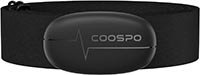
- COOSPO H6: A Bluetooth and ANT+ option for various platforms. Notably cheaper than the Polar and the Garmin.
- Polar H10: Known for its accuracy.


 |  |
 | |
Track your HRV daily, ideally first thing in the morning, to get a clean resting baseline. If you have a smart watch that reports on your HRV while sleeping, you can simply use that metric every morning. Your smart watch will also be automatically tracking for you. For example, Garmin watches track your HRV over a month, and use this data to establish your baseline. Thereafter, they report on how your daily HRV compares to your rolling 7-day average.
Related: Garmin HRM Dual vs Wahoo TRACKR Heart Rate Monitors: The Ultimate Heart Rate Monitor Showdown for Cyclists
2. Compare Against Age-Related Norms of HRV
Once you have your baseline, you can compare it with published HRV averages by age group. HRV is usually measured in RMSSD (Root Mean Square of Successive Differences), which most apps and wearables use.
Here’s a rough breakdown of average resting HRV (measured in RMSSD) by age group for healthy individuals:
HRV varies widely between individuals, but here are the typical average HRV (RMSSD) values by age:
| Age Group | Average HRV (ms) |
| 20-29 | 55-105+ |
| 30-39 | 45-95 |
| 40-49 | 35-85 |
| 50-59 | 30-75 |
| 60-69 | 20-65 |
| 70+ | 20-55 |
If your average HRV is above the high end for your age, you’re likely fitter and better recovered than most of your peers.
If it’s below the average, it might suggest higher stress, lower fitness, poor sleep, or overtraining—worth looking into.
If it is extremely low but your other metrics (such as resting heart rate and blood pressure and VO2 max) are excellent, then it is probably a good idea to check in with your doctor. Usually, all of these metrics will track together. They should all be excellent in very fit people, and are likely to all be poor in very untrained people.
3. Watch Trends More Than One-Off Numbers
HRV is highly variable. Don’t worry about a single day’s reading. Instead:
- Track your 7-day rolling average
- Compare it to your own longer-term baseline
- Note dips after intense training, illness, stress, or poor sleep
If you have a smart watch or an app, this process becomes quite easy. For example, Garmin watches will track your HRV every day for a month to get your baseline. Using this data, they will plot your rolling 7-day average. So when you check on your HRV in the morning, you can instantly see whether your HRV is normal (for you), or above average, or below average, compared to your 7-day average.
If it’s below average, you might want to reconsider your plan to do sprint intervals, and instead opt for a gentle Zone 2 ride. If it’s high (for you), you are probably ready for that tough training session, or a race.
Useful Post: Unleash Your Cycling Potential: 7 Reasons why Every Cyclist Should Use a Power Meter
Pro Tip: Combine Your HRV With Other Metrics
HRV is most powerful when interpreted alongside:
- Resting heart rate (RHR)
- Sleep quality
- Training load
- Mood and energy levels
If your HRV is higher than usual, and your RHR is low, and you feel good? You’re golden.
If your HRV drops, your RHR rises, and you feel sluggish? Time to back off and recover. Maybe a session of yoga instead of interval training up the nearest mountain?

 If your morning HRV level was unusually low, it might be time for a meditative session of yoga?
Related Post: What Is the Optimal Frequency of HIIT Training on a Bike to Increase VO₂ Max?
What Does it mean if Your HRV is Higher than Average for Your Age Group?
This question often comes up when talking with cyclists, because we do tend to be physically fitter than others. A higher HRV is usually a good sign. That said, it is important to mention that HRV is very individual. It is impacted by a number of factors, not just your fitness level. In general, the three factors that have the biggest impact on your HRV are your fitness level, your sleep quality, and whether or not you drink alcohol. Spoiler alert – NOT drinking is better!
The point is that the most important thing to note about your HRV is always whether it is low, high, or normal compared to your own averages.
But all those caveats aside, here are some of the things that a higher HRV can mean.
Good Cardiovascular Fitness
Athletes and physically active people often have higher HRV. This means that your heart is efficient and adapts well to physical demands, which is a mark of strong cardiovascular health. And of course, cardiovascular health is one of the greatest benefits of regular cycling.
Good Sleep and Recovery
High HRV can indicate that your body is recovering well during sleep, especially if seen alongside quality deep and REM sleep phases. Of course, your smart watch can tell you if you are sleeping well.
Strong Parasympathetic Activity
HRV reflects the balance between your sympathetic (fight-or-flight) and parasympathetic (rest-and-digest) nervous systems. A higher HRV typically means your parasympathetic nervous system is more dominant—signaling good recovery, resilience, and low stress levels.
Emotional Regulation and Low Stress
Higher HRV is associated with better emotional flexibility and resilience to psychological stress. If you’re managing stress well, your HRV may reflect that.
Why Should Cyclists Care About HRV?
Optimize Training and Avoid Overtraining by Tracking Your HRV
HRV helps you gauge whether you’re ready for an intense session or if you should take it easy. Studies show that using HRV-guided training can improve performance and reduce the risk of overtraining (Kiviniemi et al., 2007).
Improve Recovery
HRV is a great tool for tracking recovery. If your HRV is low, it means your body is still under stress and might need more rest.
Manage Stress & Adaptation
Not all stress comes from training – work, sleep, and life stress all impact HRV. Monitoring HRV gives you a full picture of how your body is handling everything, not just your rides. That’s why good smart watches – such as most Garmins – factor your HRV into your stress level report.
Track Overall Health and Readiness
HRV can indicate dehydration, poor sleep, or even an impending illness before you feel symptoms. For endurance athletes, this is a game-changer.
How Can I Measure HRV?
The best way to track HRV is with a smart watch that is capable of measuring HRV. Here’s a breakdown of some of the top options for cyclists, based on accuracy, features, and budget. If you are reading on a phone, turn it sideways to see the charts better.
#1. Garmin Watches – Best for Data-Driven Cyclists
Best For: Cyclists who love in-depth data, mapping, and structured training.


Garmin Models Compared, with Focus on HRV
If you are reading this on a phone, please turn your phone sideways to read this chart more easily.
| Model | HRV Accuracy | Features | Price |
| Garmin Instinct 2 | Excellent | Advanced HRV tracking. The Garmin Instinct 2 is a very attractive and very different offering from Garmin. We recommend it because it has all the health and training features of the top-of-the-line models, but at a fraction of the price. Especially now, because the Garmin Instinct 3 has just debuted, which has caused the price of the Instinct 2 to decrease. We love the Instinct 2 because it’s different. It is super rugged – it is worn by soldiers around the world, and by athletes who enjoy cycling or hiking in forests or over mountains. The battery life is superb. So … what’s the catch? Well, it does not come with a color, touchscreen, AMOLED display. Instead, you operate it with buttons, and it has a black and white MIPS (Memory in Pixel) screen. This is a reflective LCD display technology that has extremely low power consumption and is highly visible in bright sunlight. So, if you like old-school and want one of the world’s toughest watches, then this could be the watch for you. It will do all the smart watch stuff, but in black and white. More to the point here, it is perfect for tracking your HRV, and monitoring and finetuning your training. It tells your your HRV any time you like – you just have to take a Health Snapshot. It includes Body Battery and Training Readiness, which most committed athletes require. And for your cycling adventures, it has a built-in 3-axis compass and barometric altimeter, plus multiple global navigation satellite systems (GPS, GLONASS and Galileo). I am a very big fan of this Garmin watch. Oh, and tons of sports profiles too – far more than the Venu 3. | $213 |
| Garmin Forerunner 55 | Good | Very Basic HRV (only during activities), GPS, Training Plans, 2-week battery life | $199 |
| Garmin Venu 3S | Very Good | This one looks more like a watch than the others. AMOLED display, advanced HRV tracking. Analyzes your wrist heart rate readings while you are sleeping to determine your HRV. Presents you with your Body Battery score in the morning. Along with your Morning Report, you also get an Evening Summary. Both provide an overview of your sleep, recovery, daily calendar, and HRV status. This watch is very attractive because of its wealth of smart features (over and above training features), including built-in mic, music, Garmin contactless Pay, and a lot more. But … no Training Readiness score (a deal breaker for some, but acceptable for many people). | $449 |
| Garmin Forerunner 265 | Excellent | AMOLED, comparatively lightweight, advanced fitness metrics. Get your Training Readiness report as soon as you open your eyes in the morning! Your morning report includes an overview of your sleep, recovery and training outlook alongside HRV status, and training readiness. Training Readiness gauges your fitness and recovery levels. And of course, you get your Body Battery. The data presented is intended to be a close estimation of metrics tracked. Better GPS than the Venu 3S, but does not have mic and speaker – otherwise, it is mainly the same watch, except with 2 extra buttons. One other important difference (for some) is that the 265 has a Training Readiness score, while the Venu 3S only offers a Body Battery score. So, for dedicated athletes, this could give the 265 the edge. | $449 |
| Garmin Fenix 7 | Best | Multi-sport, premium HRV analytics. Solar models available. Provides a morning report that includes HRV data, offering insights into how your body is recovering from sleep. Analyzes your wrist heart rate readings while you are sleeping to determine your HRV. Also measures your stress level using a three-minute test performed while standing still, analyzing your heart rate variability to determine your overall stress level. Of course, it comes with every possible metric, including Body Battery and Training Readiness. | $699+ |
| Garmin Epix | Best | AMOLED, premium mapping & HRV. Analyzes your wrist heart rate readings while you are sleeping to determine your HRV. Provides a morning report that includes HRV data, offering insights into how your body is recovering from sleep. Of course, it comes with every possible metric, including Body Battery and Training Readiness. | $899+ |


 | |  |
#2. Apple Watch – Best for iPhone Users, and Apple Fans in General

 The Apple Ultra 2 watch looks great, has the Apple name, and has tons of features – but it might not be the best choice if your primary concern is your HRV and your training
Apple Watch Evaluated, with Focus on HRV
If you are reading this on a phone, please turn your phone sideways to read this chart more easily.
| Model | HRV Accuracy | Features | Price Range |
| Apple Watch Ultra 2 | Very Good | Bright display, cycling features, HRV. Most athletes feel that the Apple watch does not do as good a job as the Garmin watches in tracking HRV for the purpose of determining training readiness. You will need a third party app like Athlytic to find out your stress and recovery levels. Apple seems to be more focused on fitness basics, like sleep and steps. Also, of interest to many athletes, Apple watches will not export automatically to Strava. | $799 |
Best For: iPhone users who want a stylish smartwatch with solid HRV tracking and cycling features. And who are comfortable with using 3rd-party apps as workarounds to get the same information and connectivity that you automatically get on a Garmin watch.
#3. Samsung Galaxy Watch – Best for Android Users with Fairly Basic HRV Monitoring Needs


Samsung Galaxy Watch Evaluated, with Focus on HRV
If you are reading this on a phone, please turn your phone sideways to read this chart more easily.
| Model | HRV Accuracy | Features | Price |
| Samsung Galaxy Watch 7 | Good | Uses its upgraded BioActive Sensor to track your HRV. Also offers numerous health and fitness features, including ECG and blood pressure monitoring, body fat/muscle mass measurement. And it has advanced sleep tracking. Uses your HRV during sleep as one of the metrics to give you your Energy Score each morning. This can help you decide if you need a rest day. However, it does not offer a Training Readiness score, which will be a deal-breaker for many cyclists and other athletes. Also, it only offers HRV while sleeping, not during activities or at other times of the day. | $299 |
Best For: Android users who want a sleek, all-in-one watch plus activity and health tracker.
# 4. Fitbit – Best for Simplicity & Budget


Fitbits Compared, with Focus on HRV
| Model | HRV Accuracy | Features | Price Range |
| Fitbit Charge 5 | Good | Measures your HRV while sleeping. Besides HRV, the Charge 5 also tracks other health metrics like ECG monitoring, EDA scan, SpO2 monitoring, skin temperature, breathing rate, menstrual cycle tracking, sleep duration and quality, daily stress score, mood, and blood glucose tracking (some require a Fitbit Premium membership). However, it does not offer a Training Readiness score. But it does include a feature similar to Garmin’s Body Battery, called the Daily Readiness score. This score takes into account your recent activity, HRV, and sleep to determine how hard you should push yourself that day. For the price, this is pretty good. The big drawback is that you have to get a Fitbit Premium membership to access these features. None of the other brands have this subscription requirement. | $149 |
| Fitbit Sense 2 | Good | Up there with the big league in its abilities. Activity Tracker, Stress Tracking, Sleep Monitor, ECG, Heart Rate Monitor, GPS, Notifications, Phone Call, Text Messaging, Bluetooth. Includes all-day stress tracking, which uses a cEDA sensor to identify changes in your heart rate, heart rate variability, and skin temperature that signal what it calls a “body response,” or a sign of stress. So, plenty of HRV measurement. It gives you a Daily Readiness score, which combines your previous day’s activity, HRV, and sleep metrics to determine how well your body has recovered, and how hard you should train today. | $299 |
| Fitbit Inspire 3 | Decent | AMOLED color touchscreen. Health metrics include breathing rate, HRV, and more – but you have to subscribe to the Fitbit Premium membership. Very good looking, but possibly not what you want for serious training. On the other hand, it is the best activity tracker you can get for under $100, and it is reputed to be very accurate. Plus it has the longest battery life of any Fitbit (up to 10 days). Really quite impressive at the price – except for that subscription! Also worth noting is that Fitbits do not have the durability of the other brands – we have had them die in just over a year. By contrast, a Samsung will last for years, and a Garmin watch may outlive you (so if you have one of the very expensive top models, you might want to put it in your will!) | $99 |
Best For: Casual cyclists who want affordable HRV tracking, don’t mind paying a monthly subscription, and would prefer to wear a discreet band rather than a chunky watch. Fitbits are a bit contradictory, because they are the cheapest upfront, but then you have to pay a monthly fee. Before buying a Fitbit, it’s not a bad idea to sit down with a calculator and work out how much you will pay for it over a period of three years. You might find it to be more expensive than the more high-end watch you secretly have your eye on.
Which is the Best Smart Watch to Monitor Your HRV?
- For serious cyclists: Garmin Instinct 2 (our top choice for both data and price), Garmin Fenix 7, Garmin Epix, or Garmin Forerunner 265.
- For iPhone users who want HRV tracking: Apple Watch Ultra 2.
- For Android users: Samsung Galaxy Watch 7.
- For budget-conscious cyclists: Fitbit Charge 5 or Garmin Forerunner 55.
- For cash-strapped cyclists: Fitbit Inspire 3 offers great value for money. But be sure to calculate the real cost by factoring in the monthly subscription – which you do not have to pay for with any of the other brands.
How to Use Heart Rate Variability in Your Training
- Measure HRV at the Same Time Each Day – Best done in the morning before getting out of bed. Some smart watches, such as my Samsung, and most Garmins, track your HRV all night long as you sleep. This gives you a really good insight into whether you are ready for more training, or need to take a rest day.
- Track Trends, Not Single Readings – A sudden downward trend in HRV might mean extra recovery is needed.
- Adjust Training Accordingly – If your HRV is low, focus on low-intensity rides or rest days.
- Improve your HRV with Lifestyle Changes – Sleep, hydration, and stress management all help increase HRV. I am also convinced that mine seems to improve when I do more HIIT training. However, that is just my personal experience.
Related Post: What Is the Optimal Frequency of HIIT Training on a Bike to Increase VO₂ Max?
Bottom Line on Your HRV
HRV is an incredibly useful tool for cyclists who want to train smarter and recover better. When I first started tracking my own HRV, I was pleasantly surprise at how good it was. But after a while, that just inspired me to train harder so as to improve it further. Also, I do have a tendency to overdo things, and a sudden drop in my HRV is a useful warning that I am overdue for a rest day or two.
Investing in an HRV-capable smartwatch can help you unlock new performance levels while avoiding burnout and overtraining. Whether you go for a high-end Garmin Fenix 7, a magnificent but significantly cheaper Garmin Forerunner 265, a one-watch-that-does-almost-all Garmin Venu 3S, a mid-range Samsung Galaxy Watch 7, a budget-friendly Fitbit Charge 5, or a downright cheap Fitbit Inspire 3, monitoring your HRV will be a game-changer for your fitness journey.
Although these are all great choices, we stick by our top recommendation: the very rugged Garmin Instinct 2. With advanced HRV tracking, Body Battery and Training Readiness, this watch will set you up for success in your cycling – and leave you with money in your pocket for a coffee break.
An even cheaper alternative is to use an app such as Elite HRV, and pair it up with a chest heart rate monitor such as a Polar H10 monitor. These are known for their accuracy. If you already own another chest heart rate monitor, such as Garmin HRM-Pro Plus or COOSPO H6, these are compatible too.
Now, grab a device, start tracking, and ride smarter!
References Used to Write this Post
- Aubert, A. E., Seps, B., and Beckers, F. (2003). Heart rate variability in athletes. Sports Medicine, 33(12), 889-919.
- Kiviniemi, A. M., Hautala, A. J., Kinnunen, H., and Tulppo, M. P. (2007). Endurance training guided individually by daily heart rate variability measurements. European Journal of Applied Physiology, 101(6), 743-751.

Leave a Reply