
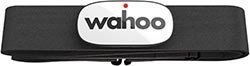
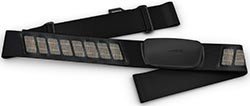
Here’s our in-depth comparison between the Garmin HRM Dual Heart Rate Monitor vs. Wahoo TRACKR. For many of us, the choice of heart rate monitor comes down to whether we prefer Garmin or Wahoo. Both companies offer justifiably popular heart rate monitors. The TRACKR is an upgrade to the Wahoo TICKR, which has been a trusted favorite for many cyclists for many years. If you’re on the fence about which device to choose, keep reading. We’re putting the Garmin HRM Dual head-to-head with the Wahoo TRACKR in a battle of design, performance, and value. We hope to provide enough detail for you to be able to make up your mind about which one to choose.
 |  |
Related Post: Best Smart Watch to Monitor Your HRV: Garmin vs Fitbit vs Apple vs Samsung
The Contenders: Garmin HRM Dual vs Wahoo TRACKR
Garmin HRM Dual
- Price: Approximately $70 on Amazon. But often on sale – check the current price here. The current price is CODING XXXX B07N3C5WRG
- Design: Sleek, single-color design with a focus on comfort. It features a small tab with a rubber cushion to prevent the metal from irritating your skin.
- Connectivity: Known for its quick, reliable connection. Data accuracy is top-notch, as expected from Garmin.
- Battery Life: Exceptional, with a claimed lifespan of up to 3.5 years using a replaceable coin-cell battery.
- Downside: The battery compartment can be challenging to access due to tiny screws, posing a risk of damaging the plastic if not handled carefully.
Technical Specs of the Garmin HRM Dual
- Module size: 62mm W x 34mm H x 11mm D (2.4″ x 1.3″ x 0.4″)
- Measures: 64-132 cm (25″-52″)
- Weight: 54.4 g (1.9 oz)
- Water resistance classification: 1 ATM
- Battery: CR2032
- Battery life: 3.5 years (if used for 1 hour a day)
- Battery cover type: Bolted
- Transmits data via ANT and via BLE
- Number of simultaneous connections supported : ANT: without limit; Bluetooth: 2
- Exercise functions: Heart rate and HRV (heart rate variability)
Wahoo TRACKR
- Price: Slightly higher at around $90. Current price on Amazon is CODING. B0D52P8XS1
- Design: Modern and robust, featuring a slim, adjustable chest strap that provides a comfortable fit while keeping the sensor securely in place during intense exercise.
- Connectivity: Offers both ANT+ and up to three simultaneous Bluetooth connections, making it versatile for various device pairings.
- Battery Life: Equipped with a rechargeable lithium-ion battery, providing over 100 active hours per charge.
- Downside: The rechargeable battery requires regular charging, which might be less convenient for some users compared to replaceable batteries with longer lifespans.
Related Post: What is HRV, Why Should I Care, and How Can I Measure It?
Technical Specs of the Wahoo TRACKR Heart Rate Monitor
- Weight: 1.4 oz (39 g) with strap
- Battery: Rechargeable Lithium Ion
- Battery Life: Over 100 Active Hours
- Charger type: USB-C to magnetic
- Sweatproof: Yes (Handwashable Strap)
- Water Rating: IPX7 (up to 1 meter for 30 minutes)
- Strap Length: Adjustable from 26.25″ to 34.5″ (66.7cm to 87.6cm)
- Maximum Chest: Fits up to 50″ (127cm) chests
- Connectivity: ANT+ and up to three simultaneous Bluetooth connections
- Supported Devices: iOS – iPhone, iPad, Mac, Android devices, Windows


Diving into the Details of Garmin HRM Dual vs Wahoo TRACKR
Price & Value
Both devices are competitively priced, with the Garmin HRM Dual offering a more budget-friendly option. However, the new Wahoo TRACKR (an upgrade to an old favorite, the Wahoo TICKR) justifies its higher price with additional features like multiple simultaneous Bluetooth connections and a rechargeable battery.
Design & Aesthetics
The Wahoo TRACKR stands out with its modern, robust design and slim profile, ensuring comfort and stability during intense workouts. Its adjustable chest strap caters to a wide range of body types.
The Garmin HRM Dual boasts a refined design with a classic, premium Garmin look. Its ergonomic fit is comfortable on the skin, thanks to the cushioned battery area. However, the challenging battery compartment design is a notable drawback.
Performance & Connectivity
In terms of performance, both devices deliver accurate heart rate data and are comfortable to wear during long rides. The Garmin HRM Dual is renowned for its quick and reliable connections, providing consistently accurate data—qualities that have made Garmin a trusted brand in the cycling community.
The Wahoo TRACKR brings additional features to the table, such as the ability to connect to multiple devices simultaneously via ANT+ and Bluetooth. This is particularly beneficial for users with multi-device setups, allowing heart rate data to sync across platforms seamlessly.
Related Post: Garmin Edge 1050 vs 1040 – What’s the Difference?
Battery Life
Battery life is a significant differentiator between the two devices. The Garmin HRM Dual boasts an impressive battery life of up to 3.5 years with a replaceable coin-cell battery, minimizing maintenance concerns.
In contrast, the Wahoo TRACKR features a rechargeable lithium-ion battery with over 100 active hours per charge. While this reduces the need for frequent battery replacements, it does require regular charging, which may be less convenient for some users. Although in my personal experience, having to charge every 100 hours really is not a deal-breaker.
| |
LED lights – A Unique Feature of the Wahoo TRACKR
One thing I always loved about my old Wahoo TRACKR was its ability to communicate with me via tiny LED lights at the top of the band. This feature has been carried into the upgraded TRACKR, and improved upon. Here are the details.
The Wahoo TRACKR heart rate monitor utilizes an LED indicator to provide users with real-time information on pairing status, battery level, and charging progress. This feature is particularly useful for cyclists who want immediate visual feedback on their device’s status.
Pairing Status:
- Blue LED Slow Flash: The sensor is active and searching for a connection.
- Blue LED Quick Flash: The device is in the process of connecting to another device.
- Blue LED Solid: A successful connection has been established.
Note: To conserve battery life, the LED operation stops 30 seconds after activation.
Charging Indicators:
- Red LED Flash: Battery level between 0-25%.
- Orange LED Flash: Battery level between 25-50%.
- Green LED Flash: Battery level between 50-99%.
- Green LED Solid: Battery is fully charged.
Of course, you can also monitor the charging status via the Wahoo app. In practice, I spend almost no time in my Wahoo app. So I am very happy that the LED lights can give me a heads-up.
Low Battery Alerts:
- Three Orange LED Flashes: Battery level is between 5-25%.
- Red LED Flash for 2 Seconds: Battery level is critically low (0-5%), after which the device will shut down.
If powered on below the 5% threshold, the device will flash red for 2 seconds before shutting down again.
These LED indicators are integral to the Wahoo TRACKR’s user interface, giving you immediate insights into the device’s operational status, which is a distinctive (and very welcome) feature compared to the Garmin heart rate monitor.
Related Post: Complete Guide to Using Power Zones for Cycling Training
Pros and Cons at a Glance – Garmin HRM Dual vs Wahoo TRACKR
Garmin HRM Dual Pros:
- Accurate Data: Consistently reliable heart rate readings.
- Quick Connection: Minimal delay when pairing with devices.
- Exceptional Battery Life: Up to 3.5 years on a single coin-cell battery.
Garmin HRM Dual Cons:
- Battery Compartment Woes: Tiny screws and a fiddly design can lead to frustration and potential damage over time. The design verges on the sadistic … not sure what the designers were thinking, to inflict this on users. Sure, it’s only once in 3 years that you have to do it. But that is still too often when it’s this difficult.
Related Post: Unleash Your Cycling Potential: 7 Reasons Why Every Cyclist Should Use a Power Meter
Wahoo TRACKR Pros:
- Robust Build: Modern, slim design with a comfortable, secure fit.
- Multi-Device Connectivity: Supports both ANT+ and up to three simultaneous Bluetooth connections.
- Rechargeable Battery: Over 100 active hours per charge, reducing the need for battery replacements.
- The LED Lights: These offer visual information, so that you know what your heart rate monitor is doing, and what your battery status is. For me, these are the decisive feature that makes me c=choose Wahoo every time.
Wahoo TRACKR Cons:
- Regular Charging Required: The rechargeable battery necessitates periodic charging, which may be less convenient for some users.
- Downside: I initially experienced some connection issues with my unit. This was because I tried to connect to the unit via the Bluetooth on my phone. Understandable, since this is how you connect to pretty much everything else on the planet. But no, Wahoo is special. You must connect via the Wahoo app. And in fact, I had to tell my phone to forget the Wahoo, because my initial attempts to connect via Bluetooth caused confusion, resulting in a slow connection to Zwift. However, if you actually follow the instructions and only try to connect via the Wahoo app, then you will be fine.
Bottom Line on Garmin HRM Dual vs Wahoo TRACKR
| |
After testing both devices and comparing their features, the choice between the Garmin HRM Dual and the Wahoo TRACKR is not obvious. Instead, it will simply boil down to your personal preferences and priorities.
The Garmin HRM Dual is solid and dependable, with superb data accuracy, quick connections, and exceptional battery life—qualities that have made Garmin a trusted brand in the cycling community for years. However, its challenging battery compartment design might be a deal-breaker for those who value ease of maintenance.
On the other hand, the Wahoo TRACKR offers a modern, robust design with additional connectivity options and a rechargeable battery. Plus of course, I love the LED lights. If you prefer a device that can sync with multiple gadgets simultaneously and appreciate a contemporary aesthetic, the Wahoo TRACKR is a compelling choice.

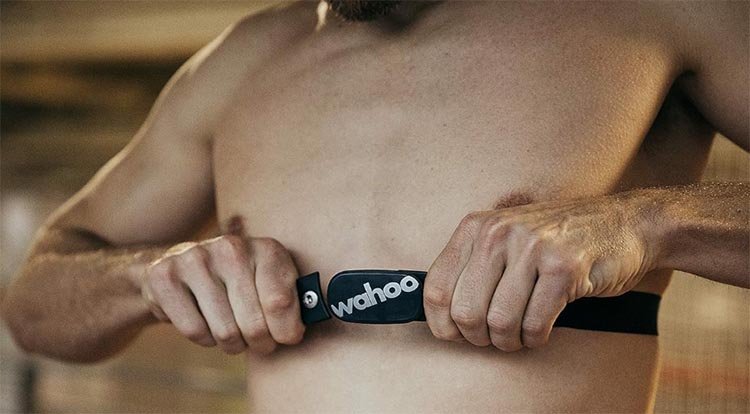
For my personal use, I lean towards the Wahoo TRACKR. Despite the need for regular charging, the extra features, including the LED lights, and the slightly superior design make it more appealing. If you’re in the market for a new heart rate monitor, consider what matters most to you—whether it’s the exceptional battery life and reliability of Garmin or the versatility and modern design of Wahoo. Either way, both options provide accurate heart rate data to help you optimize your training and cycling performance.
Let me know in the comments what your experiences have been with these devices or if you have any questions about choosing the right heart rate monitor for your needs.
Happy cycling, and may your rides be smooth and your heart rate data accurate!

Leave a Reply