
This post explains exactly how indoor cycling can cause side pain, and how to prevent and cure it. If you’ve ever experienced tenderness on both sides of your torso—between the rib cage and the hips—after an indoor cycling session, you’re not alone. Many cyclists, especially those who enjoy indoor training, report this kind of discomfort. Personally, I had quite severe DOMS (delayed onset muscle soreness) in my sides for 7 days after a particularly intense Zwift session. The good news? It’s usually nothing serious and can often be resolved with simple adjustments and stretches. Let’s break down why this happens and how to relieve it.

 When I am cycling on Zwift, my avatar looks as heroic as I feel. But sometimes, after a long ride, I feel anything but heroic, because I experience side pain between my ribs and hips. This is pretty common. This post explains how to deal with it
Why Does Stationary Cycling Cause Side Pain?
Engagement of Core Muscles
Stationary cycling requires more core stability than many realize. Unlike outdoor cycling, where slight shifts in body position and road conditions engage different muscle groups, indoor cycling keeps you in a fixed posture. This prolonged engagement of the obliques and lower back muscles can lead to muscle fatigue and tenderness.
Incorrect Bike Setup and Saddle Position
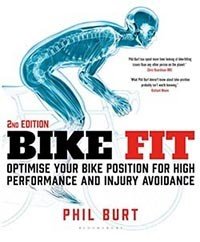
If your seat is too high, too low, or too far forward/backward, it can cause an unnatural pelvic tilt. This strain can radiate up through the lower back and sides. A proper bike fit can help prevent excessive stress on your torso.
Related Post: How to Find the Right Height, Tilt and Setback for Your Bike Saddle


Insufficient Core Strength
Weak core muscles can lead to overcompensation by the lower back and oblique muscles. Over time, this imbalance can cause tightness and soreness in the side muscles.
Related Post: Stop Doing Crunches! 10 Minute Complete Core Workout for Cyclists
Static Hip Positioning
Because the bike remains stationary, your hips experience less natural side-to-side movement compared to outdoor riding. This can cause stiffness in the quadratus lumborum (QL) muscles, which connect the lower ribs to the pelvis, leading to discomfort along the sides of your torso.

 Indoor cycling can cause stiffness in the quadratus lumborum (QL) muscles (shown in red), which connect your lower ribs to your pelvis
The job of the quadratus lumborum muscles is to stabilize the lower back and pelvis, help with side bending of the spine, and support your core during movement like walking or cycling. So it is easy to see how they can be over-worked during intense cycling sessions.
However, it is also possible to overwork the internal and external obliques, which are side muscles that lie over top of the QL muscles.

 The internal and external obliques lie over top of the QL muscles
Kinds of Side Pain after Cycling
Pain that is caused by overworking the QL muscles presents as a deep and dull/aching pain, located toward the lower back or sides, just above the pelvis and beneath the ribs—kind of where you’d place your hands when you’re holding your back after a long day.
On the other hand, if you have over-stressed your obliques (which happens less often), you feel a different kind of pain. Your obliques engage when you move your torso slightly side to side (common during harder intervals), or if you’re bracing during sprint-like efforts without full core support.
Oblique strain feels more surface-level and may present as a sharp or pulling pain, especially noticeable when twisting or side bending. It’s more lateral and anterior (toward the front/sides of your torso).
How to Self-Test whether the Pain is Coming from your obliques or from your QL muscles
Try these and note where the tenderness kicks in:
Side bend while standing – If you feel tightness in the deep flank, likely the QL.
Twist your torso – Pain here usually points to obliques.
Lay on your back and lift one leg slowly – If the opposite side flares up, that’s often the QL stabilizing.
If your pain is quite bad and lasts from 3 to 7 days, it is very possible that you have managed to strain both your QL muscles and your obliques. Which, I suspect, is exactly what I did.
How to Relieve and Prevent Side Pain caused by Indoor Cycling
Wear the Right Clothes
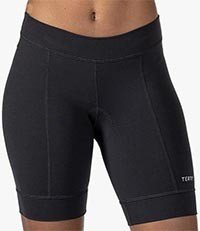
When I started indoor cycling, I just hopped on wearing the shorts I happened to be wearing that day. The next day, I really paid for that mistake! Just because you are cycling indoors, that does not change the fact that you need to dress like a cyclist. In fact, it is more important to use specialized clothing, because your body tends to be more rigid when cycling indoors. This increases the need to protect yourself from injury. In particular, you need good padded shorts to protect your more sensitive parts. It also helps to have a foam roller to relax your back and side muscles after a long stationary ride.
 |  |
 |  |
Related Post: How Women Cyclists Can Prevent Saddle Soreness and Associated Issues
Related Post: Can Cycling Cause Penis Numbness, Erectile Dysfunction, and Prostate Cancer?
Adjust Your Bike Fit
- Ensure your saddle height is appropriate so your knee has a slight bend at the bottom of the pedal stroke.
- Adjust your handlebars so you’re not overly hunched forward, which can strain your sides and lower back.
- Check your saddle position to ensure your hips remain level while pedaling.
Related Post: How to Find the Right Height, Setback and Tilt for Your Bike Saddle
Strengthen Your Core
Incorporating core exercises into your routine can help alleviate side pain by improving stability. Try:
- Planks – Strengthens deep core muscles to support your posture while cycling.
- Side Planks – Targets the obliques, reducing the strain on them during rides.
- Dead Bugs – Improves coordination between the core and lower body.
Related Post: Stop Doing Crunches! 10 Minute Complete Core Workout for Cyclists
Stretch After Cycling to Reduce Cycling-related Side Pain
Tight muscles can be a major culprit in cycling-related side pain. After each bike ride, incorporate some of these stretches. Try them all and see which ones help you the most.
Doorway Lat Stretch

 Doorway Lat Stretch
How to do it:
- Stand in a doorway with one arm extended overhead, resting your hand on the doorframe.
- Step forward slightly and lean your body away from your hand.
- Hold for 20-30 seconds per side.
Seated Side Stretch
How to do it:
- Sit cross-legged and extend one arm overhead, leaning to the opposite side.
- Hold for 20–30 seconds on each side to stretch the obliques and QL muscles.
Standing Side Stretch
How to do it:
- Stand with feet hip-width apart.
- Raise one arm overhead and gently lean to the opposite side.
- You should feel a stretch along the side of your lower back and flank.
- Keep your hips square to the front while holding the stretch.
Cat-Cow Stretch

 The cat-cow stretch
How to do it:
- Get on all fours and alternate between arching your back and rounding it.
- This movement helps release tension in the lower back and sides.
Child’s Pose with Side Reach
How to do it:
- From kneeling, sit back into Child’s Pose.
- Walk your hands to the right, stretching your left side.
- Hold 30 seconds, then switch.
Lying Windshield Wipers
How to do it:
- Lie on your back, knees bent and together, arms out in a T.
- Slowly lower knees side to side to gently stretch the sides of your torso.
Pelvic Tilts
How to do it:
- Lie on your back with your knees bent, flatten your lower back against the floor, and then release.
- This can help reset tight hip and side muscles.
Related Post: The Ultimate Guide to Stretches for Cyclists for Pain and Injury Prevention
Strengthening Exercises to Combat Cycling-related Side Pain
It may also help you to do these strengthening exercises 2 to 3 times per week for prevention.
Side Plank with Leg Lift
Targets: Obliques, QL, glute medius, and lateral stabilizers
How to do it:
Start in a side plank:
Lie on your side with your elbow directly under your shoulder.
Stack your feet on top of each other (or stagger them for more stability).
Engage your core and lift your hips off the ground so your body forms a straight line from head to heels.
Add the leg lift:
Slowly raise your top leg about 6–12 inches, keeping it straight and toes pointing forward (not up).
Hold for 2–3 seconds, then lower with control.
Hold or repeat:
You can hold the side plank with the leg lifted for 15–30 seconds, or do 8–10 reps of slow leg lifts on each side.
Extra Tips:
Keep your hips stacked and don’t let your top hip roll forward—this mimics pelvic stability on the saddle.
Focus on engaging the lower oblique (the one closer to the floor) to strengthen your QL and side core.
Dead Bug
Targets: Deep core muscles, obliques, and spinal stabilizers
How to Do It:
Start on your back:
Lie flat with your arms extended toward the ceiling and knees bent at 90° above your hips (like a tabletop position).
Brace your core:
Press your lower back gently into the floor—this is key for spinal stability and to prevent QL compensation.
Move opposite limbs:
Slowly extend your right leg and left arm toward the floor, keeping them straight but not touching the ground.
Move slowly—this should feel like a controlled “reach” with full-body tension.
Return to start and switch sides.
Reps:
Do 8–12 slow reps per side, focusing on control over speed.
Extra Tips:
Imagine you’re trying to pedal with a perfectly still upper body—the dead bug teaches your body how to isolate movement while maintaining core stability, just like on the bike.
If your back arches off the ground, reduce the range of motion or tap your heel instead of fully extending the leg.
Bird Dog
How to do it:
- From hands and knees, extend opposite arm and leg.
- Focus on stability and avoid twisting your torso.
- Builds endurance in QL and deep core muscles.
- 10 reps per side, slow and controlled.
Banded Side Steps

 Banded side steps
How to do it:
- Place a resistance band around your thighs.
- Step side to side while staying in a half squat.
- Activates glutes and lateral stabilizers, reducing QL overuse on the bike.
Dead Bug
How to do it:
- Lie on your back, arms and legs raised.
- Slowly lower opposite limbs while keeping your core braced.
- Helps train your body to brace evenly, reducing compensation by the QL.
Hydration and Recovery
Dehydration can contribute to muscle cramping and stiffness. Make sure to drink plenty of fluids before, during, and after your rides. Proper recovery, including adequate sleep and nutrition, also plays a crucial role in preventing recurring muscle pain.
 |  |
 |  |
 | |
Final Thoughts on How Indoor Cycling Can Cause Side Pain and How to Fix It
If you’re experiencing side pain from stationary cycling, don’t worry—it’s common and usually fixable. A combination of proper bike fit, core strengthening, stretching, and hydration can significantly reduce discomfort. By making a few small adjustments, you can enjoy pain-free indoor cycling and keep your training on track.
Have you experienced side pain while cycling indoors? Share your experiences and solutions in the comments below!
 | |  |
Related Posts about Workouts and Exercise for Cyclists
Related Post: Complete Guide to Stretching for Cyclists
Related Post: Why Cycling Is the Ultimate Full-Body Workout (and How to Get the Most Out of It)
Related Post: Exercise Doesn’t Help with Fat Loss – A Myth that Needs to be Busted?
Related Post: What Is the Optimal Frequency of HIIT Training on a Bike to Increase VO₂ Max?

Leave a Reply