
In this post we discuss the 10 most common cycling mistakes, and show you how to avoid them. We hope this helps you to get the most out of cycling, and not make the same mistakes we have made. I have been guilty of most of these mistakes, and have made some of them multiple times – except probably not no. 7. Which ones have you made? We would love to hear from you in the comments!
Cycling is an outstanding way to stay fit, explore the outdoors, and reduce your carbon footprint. But like any physical activity, it comes with a learning curve. Many cyclists—beginners and seasoned riders alike—make mistakes that can lead to discomfort, inefficiency, or even injury. The good news? Most of these mistakes are avoidable with the right knowledge. Here’s a science-and-experience backed breakdown of the ten most common cycling mistakes and how to fix them.
1. Riding the Wrong Size Bike – the Most Common of Cycling Mistakes
Why It’s a Problem:
A bike that doesn’t fit properly can cause knee pain, back pain, wrist strain, and poor pedaling efficiency. Studies show that improper bike fit is one of the leading causes of overuse injuries in cyclists (Clarsen et al., 2010).

 This bike is a little too large, so the rider can only just stand over it. She would need a bike at least one size smaller to be completely comfortable
Related Post: Complete Bike Frame Size Guide – Bike Frame Measurement and Size Charts for Adults & Kids
How to Fix It:
- Check frame size: Stand over the bike and ensure you have at least an inch of clearance between you and the top tube.
- Adjust saddle height: Check out our post, which shows you exactly how to get your saddle height right. This is crucial, and you absolutely will end up in pain if you don’t get it right. I know this from bitter experience.
- Consider a professional fitting: Many bike shops and physiotherapists offer fitting services to ensure optimal positioning. Or you can use an AI app, such as MyVeloFit.

 A professional bike fit is the way to go, if you have the money to spare. This was my first professional fitting, many years ago. That was my beloved Specialized Tricross, which I stupidly sold a few years ago. I still dream about it sometimes …
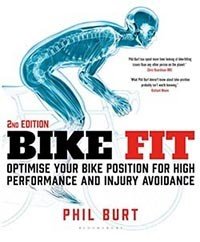
- If a professional bike fit is not in your budget right now, you could buy the Bike Fit book below and do the fitting yourself. This is a beautiful book in every way – I just love it. It’s a treasure trove of advice from one of the foremost authorities in bike fit in the world. And the book is beautiful to read, with excellent design and hundreds of photos of bikes :)


Related Post: How to Find the Right Height and Setback for Your Bike Saddle
2. Ignoring Proper Tire Pressure

 Never ignore tire pressure! This is an all too common cycling mistake
Why It’s a Problem:
Underinflated tires increase rolling resistance, making riding harder, while overinflated tires reduce traction and comfort. A 2015 study in the Journal of Sports Science & Medicine found that proper tire pressure improves efficiency and reduces the risk of flats. Also, if your bike sits in the garage with a flat for a couple of months, you run the risk of ruining the tire. Which then becomes an expensive fix.
How to Fix It:
- Check your tire pressure before every ride.
- Follow the manufacturer’s recommended PSI range (printed on the tire sidewall).
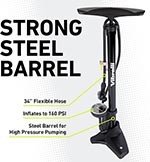
- Use a floor pump with a gauge for accuracy. These pumps are also a lot easier to use than the smaller hand pumps. Most of them automatically switch from Presta to Schrader valves, such as this one.


3. Bad Riding Posture
Why It’s a Problem:
Slouching or overreaching on your bike can cause neck, back, and wrist pain. Poor posture can also reduce power output by limiting lung expansion and oxygen intake (British Journal of Sports Medicine, 2018). It also reduces your power because you will probably not be positioned correctly to exert maximum force with your hips and legs.
How to Fix It:
- Keep a neutral spine—your back should be straight but not rigid.
- Relax your elbows to absorb road vibrations.
- Engage your core to support your upper body and prevent excess weight on your hands.
- Make sure your bike fits you correctly – see no. 1 above.
Related Post: Complete Bike Frame Size Guide – Bike Frame Measurement and Size Charts
 |  |
 |  |
4. Skipping Warm-Ups and Cool-Downs
Why It’s a Problem:
Jumping straight into a ride can cause muscle stiffness and increase injury risk. Research suggests that warming up improves circulation and prepares muscles for activity (McGowan et al., 2015).
How to Fix It:
- Always start with 5-10 minutes of easy pedaling.
- Do some dynamic stretching before riding. Dynamic stretching involves controlled, movement-based stretches that gently take muscles and joints through their full range of motion, helping to activate and warm up the body before exercise. An example is Leg Swings – Stand next to a wall or hold onto a stable surface and swing one leg forward and backward in a controlled motion, gradually increasing the range of motion. This helps loosen up the hip flexors and hamstrings.
- After the ride, cool down with gentle pedaling and then static stretching. Static stretching involves holding a stretch in a fixed position for a period of time, which helps improve flexibility and is best done after a ride to aid muscle recovery. An example is the Standing Quadriceps Stretch – Stand tall, grab your ankle, and pull your heel toward your glutes, keeping your knees together. Hold for 20–30 seconds on each side to relieve tight quads.

 Quadriceps stretch. Our thanks to our model, Emily Goodwill
- Another example of an ideal post-bike-ride stretch is shown in the photo below.

 Piriformis Stretch (Seated or Supine Figure 4 Stretch). This is one of the essential stretches after a bike ride, as it stretches out all of the muscles directly involved in a bike ride – the hips, glutes, and legs. Our thanks to our model, fitness coach Wendy Orsten
Related Post: Complete Guide to Stretching for Cyclists
5. Pedaling with Poor Technique – One of the Most Difficult Cycling Mistakes to Fix
Why It’s a Problem:
Mashing the pedals with only downward force fatigues muscles quickly and increases joint strain. It’s essential to develop a smooth pedal stroke, and to develop the skills to modulate your pedaling cadence for different terrains and situations.
How to Fix It:
- Engage your hamstrings and calves, not just your quads.
- If you are using clipless pedals, practice pulling up as well as pushing down.
- Focus on a smooth, circular pedal stroke. Apps like Zwift contain beginner training plans that include very useful instructions on how to improve your pedaling technique. In the screenshot below, a Zwift training ride is teaching how to control your pedaling cadence in order to build your pedaling strength. In this case, it is teaching me to keep my pedaling cadence to 60 rpm. This helps me to become conscious of my cadence, and it helps me learn how to control it.

 Apps like Zwift can coach you in pedaling technique, helping you to avoid one of the most common cycling mistakes
6. Not Eating or Drinking Enough
Why It’s a Problem:
Dehydration and lack of fuel lead to fatigue, dizziness, and poor performance. A study in the Journal of Applied Physiology found that even 2% dehydration can impair cycling endurance.
How to Fix It:
- Drink 500-750 ml of water per hour, adjusting for heat and intensity.
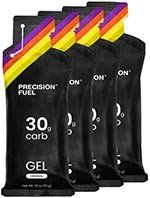
- Eat a small carb-based snack if riding longer than an hour (e.g., a banana or an energy gel). Bananas are ideal, at around 30 to 40 grams of carbs per banana. Fuel gels are also very useful because it is so easy to carry them in your pockets, and they are so easy to drink while cycling. If you are doing more than an hour, take along between 30 to 60 grams of carbs per hour to keep you going, and to avoid the dreaded “hitting the wall” – when you find you simply cannot continue to pedal any more.
- Be sure to maintain your electrolyte balance by drinking at least one large bottle of electrolyte mix during a long ride.
| |
 |  |
 | |
7. Ignoring Traffic Rules and Safety
Why It’s a Problem:
Accidents are more likely to happen when cyclists don’t follow road rules. A study from the National Highway Traffic Safety Administration found that nearly 30% of bike-related fatalities result from cyclists ignoring traffic signals. (The other 70% might have been caused by motorists ignoring traffic signals.) The point is that if everyone on the road obeys the rules, everyone on the road is going to be safer.
How to Fix It:
- Always obey traffic signals and signs. The only exception might be at a stop sign on a steep uphill. If you would be unable to pull off safely from a dead stop, consider evaluating the situation carefully and deciding whether you can safely negotiate the intersection by slowing down to a crawl. If someone else who has the right of way would then hit you, then of course you would have to stop. But if there is no other traffic visible in any direction, it should be OK. Note: this is my personal opinion, not my advice. When it comes to safety, you do you.
- Ride predictably—don’t weave between cars. This is especially dangerous because from the driver’s point of view, it can seem as if you just magically appear.
- Use hand signals to communicate with drivers. I live in an area where motorists seem to think that using signals is a sign of weakness, and this has caused more than one near accident. If someone is not signaling, there is no way to know their intentions, and if you don’t know their intentions, you cannot take steps to not collide with them.
- Wear bright clothing and use lights at night.
Related Post: Top 10 Tips to Not Get Hit by a Car on Your Bike
8. Wearing the Wrong Clothing
Why It’s a Problem:
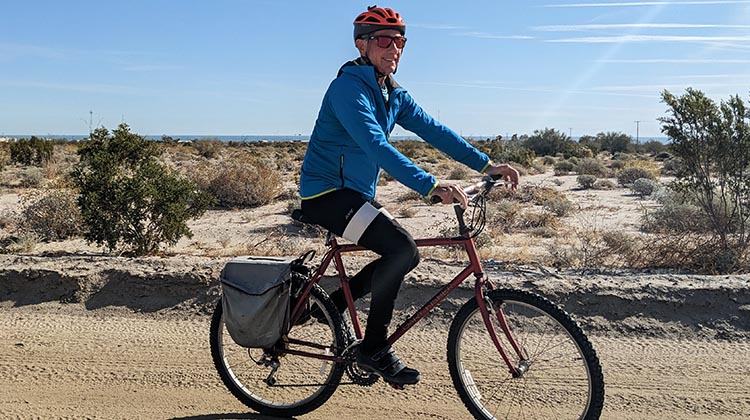
Cotton absorbs sweat and stays damp, leading to chafing and discomfort. Loose pants can get caught in the chain, causing accidents. You need the right kind of fabric, and the right kind of clothes. Contrary to popular belief, it’s not about “looking like a cyclist.” It’s about being comfortably and appropriately dressed. For example, regular jackets can catch under your saddle, potentially causing you to fall over when stopping your bike. That is why you need a jacket that is especially designed to be worn on a bike.

How to Fix It:
- Wear moisture-wicking fabrics.
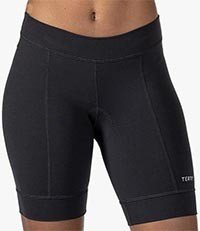
- Use padded cycling shorts for comfort on long rides. Bib shorts are the absolute best, because they stay in place, rather than hiking up (which can become very uncomfortable, very fast!)
- Dress in layers to regulate body temperature.
 |  |
Related Post: 7 of the Best Waterproof Cycling Jackets for Men and Women for 2025
9. Overtraining and Ignoring Recovery
Why It’s a Problem:
Training too hard without rest can lead to fatigue, injury, and burnout. The American College of Sports Medicine warns that overtraining can cause decreased performance, immune suppression, and chronic muscle soreness. Personally, my problem has always been overdoing things. I know from bitter experience that this only leads to injury, and forced time off the bike.
How to Fix It:
- Follow the 80/20 rule: 80% of your rides should be at low-to-moderate intensity, with 20% at high intensity, or in the HIIT format.
- Take at least one rest day per week.
- Listen to your body—if you’re feeling drained, ease up.
- Consider harnessing the power of technology. Some smart watches now include body batteries that help you to be in tune with this. For example, if your heart rate or your heart rate variability is abnormal because you are over-tired, a good smartwatch such as the Garmin Forerunner 55 will warn you about this. This is about the cheapest smart watch (under $200) that I could recommend for a reliable body battery. Personally I would prefer the Garmin Venu 3, but it’s substantially more expensive, at over $400.
Related Post: What Is the Optimal Frequency of HIIT Training on a Bike to Increase VO₂ Max?
10. Neglecting Bike Maintenance
Why It’s a Problem:
A poorly maintained bike is less efficient and more dangerous. According to the League of American Bicyclists, many accidents stem from mechanical failures.
How to Fix It:
- Check your brakes and gears regularly.
- Keep your chain clean and lubricated. See our post on how to quickly and efficiently deal with this important maintenance chore.
- Get a professional tune-up at least once a year.
Related Post: How To Clean Your Bike Chain the Easy Way
Final Thoughts
Cycling should be fun, safe, and efficient. By avoiding these common mistakes, you’ll improve your comfort, performance, and longevity in the sport. Whether you’re riding for fitness, commuting, or adventure, small adjustments can make a huge difference. Now, go out and ride smarter!
 | |  |

Leave a Reply